

Every year on 28 July, World Hepatitis Day brings global attention to one of the leading causes of liver disease. For 2026, the World Health Organization (WHO) has adopted the theme “Hepatitis: Let’s Break It Down,” encouraging healthcare communities, policymakers and the public to break down barriers to awareness, prevention, diagnosis and care.
Breaking Down Hepatitis Starts with Better Understanding
Viral hepatitis does not refer to a single disease, but to a group of viruses that differ in transmission, clinical progression and long-term effects. Some infections resolve after an acute illness, while others may persist without noticeable symptoms.
Improving awareness of these differences supports prevention, appropriate healthcare access and evidence-based clinical evaluation.
Why Hepatitis Remains a Global Challenge
According to the World Health Organization, chronic hepatitis B and hepatitis C account for the majority of hepatitis-related morbidity and mortality globally. Because many infections remain asymptomatic for extended periods, individuals may be unaware of their infection until liver damage has already developed.
Several factors continue to contribute to the global burden of viral hepatitis, including:
• Limited awareness of hepatitis risk factors
• Delayed access to healthcare services
• Differences in vaccination coverage between regions
• Unequal availability of laboratory testing
• Variations in screening and surveillance programs
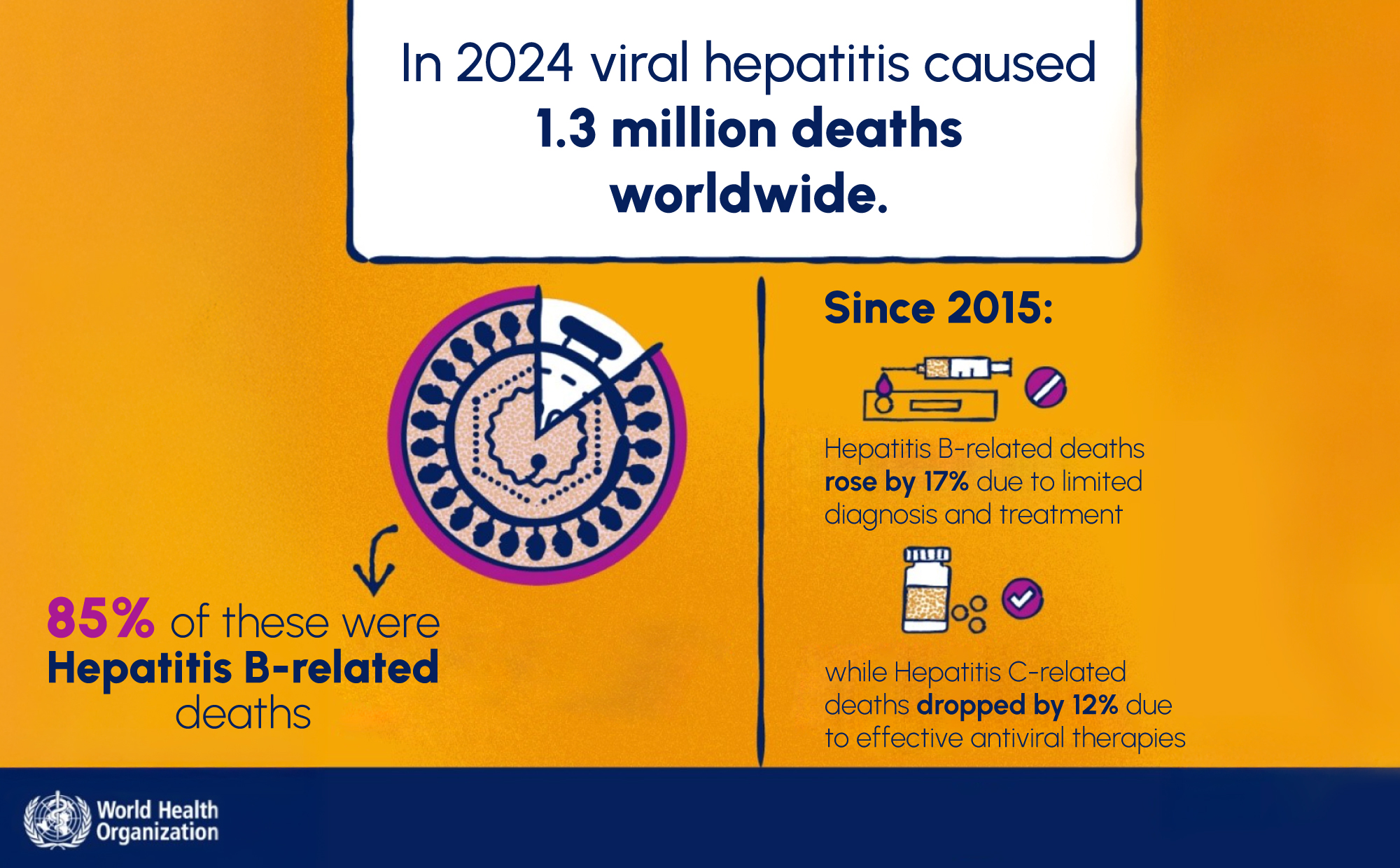
These challenges demonstrate why hepatitis remains an important public health priority. Increasing awareness is not only about understanding the disease itself but also about improving access to preventive measures and appropriate diagnostic pathways.
Understanding the Five Types of Viral Hepatitis
- Hepatitis A (HAV): Hepatitis A is mainly transmitted through contaminated food or water and close contact with an infected person. It causes an acute infection and does not become chronic. Vaccination, food safety, clean water and good hygiene are important preventive measures.
- Hepatitis B (HBV): Hepatitis B spreads through blood and certain body fluids, including transmission from mother to child during birth. Infection may be acute or chronic, with chronic infection carrying a risk of progressive liver disease. Vaccination is the primary preventive measure.
- Hepatitis C (HCV): Hepatitis C is a blood-borne infection commonly associated with exposure to infected blood. It may cause acute or chronic infection and can remain asymptomatic for years. No vaccine is currently available, making prevention and appropriate laboratory evaluation particularly important.
- Hepatitis D (HDV): Hepatitis D occurs only in people who are also infected with hepatitis B. It may develop at the same time as HBV infection or later in individuals with chronic hepatitis B. Hepatitis B vaccination also helps prevent hepatitis D.
- Hepatitis E (HEV): Hepatitis E is mainly transmitted through contaminated drinking water and usually causes an acute, self-limiting infection. More severe disease may occur in certain groups, particularly pregnant women. Prevention primarily depends on safe water, sanitation and hygiene.
Why Symptoms Are Often Missed
One of the greatest challenges in managing viral hepatitis is that symptoms are frequently absent or non-specific, particularly during the early stages of infection. When symptoms do occur, they may resemble many other common illnesses and can include:
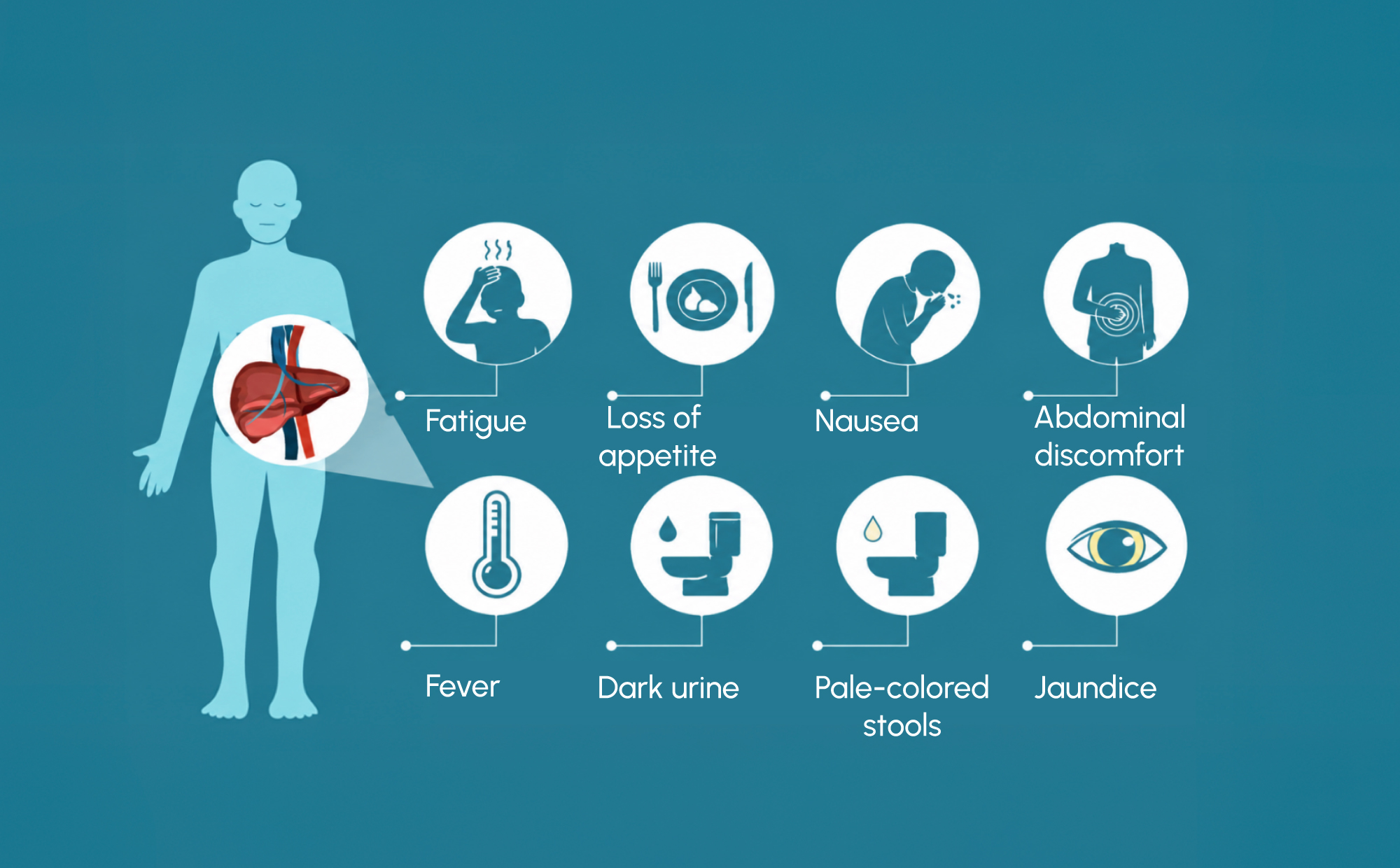
Because these findings are not unique to viral hepatitis, clinical presentation alone cannot determine the underlying cause. In some individuals, particularly those with chronic hepatitis B or hepatitis C, symptoms may not appear until liver damage has progressed.
For this reason, healthcare professionals consider multiple factors during patient evaluation, including medical history, potential exposure risks, physical examination and laboratory findings.
Conclusion
The theme of World Hepatitis Day 2026, “Hepatitis: Let’s Break It Down,” emphasizes the importance of improving awareness, reducing stigma and increasing access to evidence-based healthcare services.
Breaking down hepatitis begins with understanding the differences between hepatitis viruses and recognizing the importance of prevention, awareness and timely clinical evaluation. As global efforts continue toward hepatitis elimination, access to reliable laboratory testing remains an important component of evidence-based healthcare.
Contact sales@vitrosens.com to learn Vitrosens portfolio and more about our hepatitis testing solutions.
References
- World Health Organization. World Hepatitis Day 2026: Hepatitis – Let’s Break It Down.
- World Health Organization. Hepatitis A – Fact Sheet. Updated 14 May 2026.
- Centers for Disease Control and Prevention. Clinical Testing and Diagnosis for Hepatitis B. Updated 31 January 2025.
- Terrault NA, Lok ASF, McMahon BJ, et al. Update on Prevention, Diagnosis, and Treatment of Chronic Hepatitis B: AASLD 2018 Hepatitis B Guidance. Hepatology. 2018;67(4):1560-1599. doi:10.1002/hep.29800
- European Association for the Study of the Liver (EASL). EASL Recommendations on Treatment of Hepatitis C: Final Update. Journal of Hepatology. 2020;73(5):1170-1218.


