

The World Health Organization (WHO) includes sperm concentration among the parameters evaluated during standardized semen examination. However, WHO also emphasizes that semen parameters should not be interpreted as absolute boundaries between fertile and infertile individuals. Fertility assessment requires consideration of multiple factors rather than a single measurement.
Male reproductive health involves several biological factors, and semen characteristics represent an important part of fertility assessment. Among these characteristics, sperm concentration describes the number of spermatozoa present within a defined volume of semen. It provides useful information about sperm production but represents only one component of a broader reproductive evaluation.
What Is Sperm Concentration?
Sperm concentration refers to the number of sperm cells present per unit volume of semen. During a comprehensive semen analysis, laboratories may evaluate sperm concentration together with other characteristics such as semen volume, total sperm number, motility, morphology and vitality. These parameters provide different types of information about semen and sperm characteristics.
Importantly, sperm concentration and total sperm count are related but different measurements. Concentration describes spermatozoa within a particular volume, whereas total sperm number considers the spermatozoa present throughout the entire ejaculate. Therefore, interpreting one parameter without the broader semen profile provides only limited information.
Why Can Sperm Concentration Vary?
Semen characteristics can vary between samples from the same individual. Collection conditions, abstinence period, incomplete sample collection and other biological or pre-analytical factors can influence semen analysis results. For this reason, standardized sample collection and testing procedures are important when clinicians conduct a comprehensive fertility evaluation.
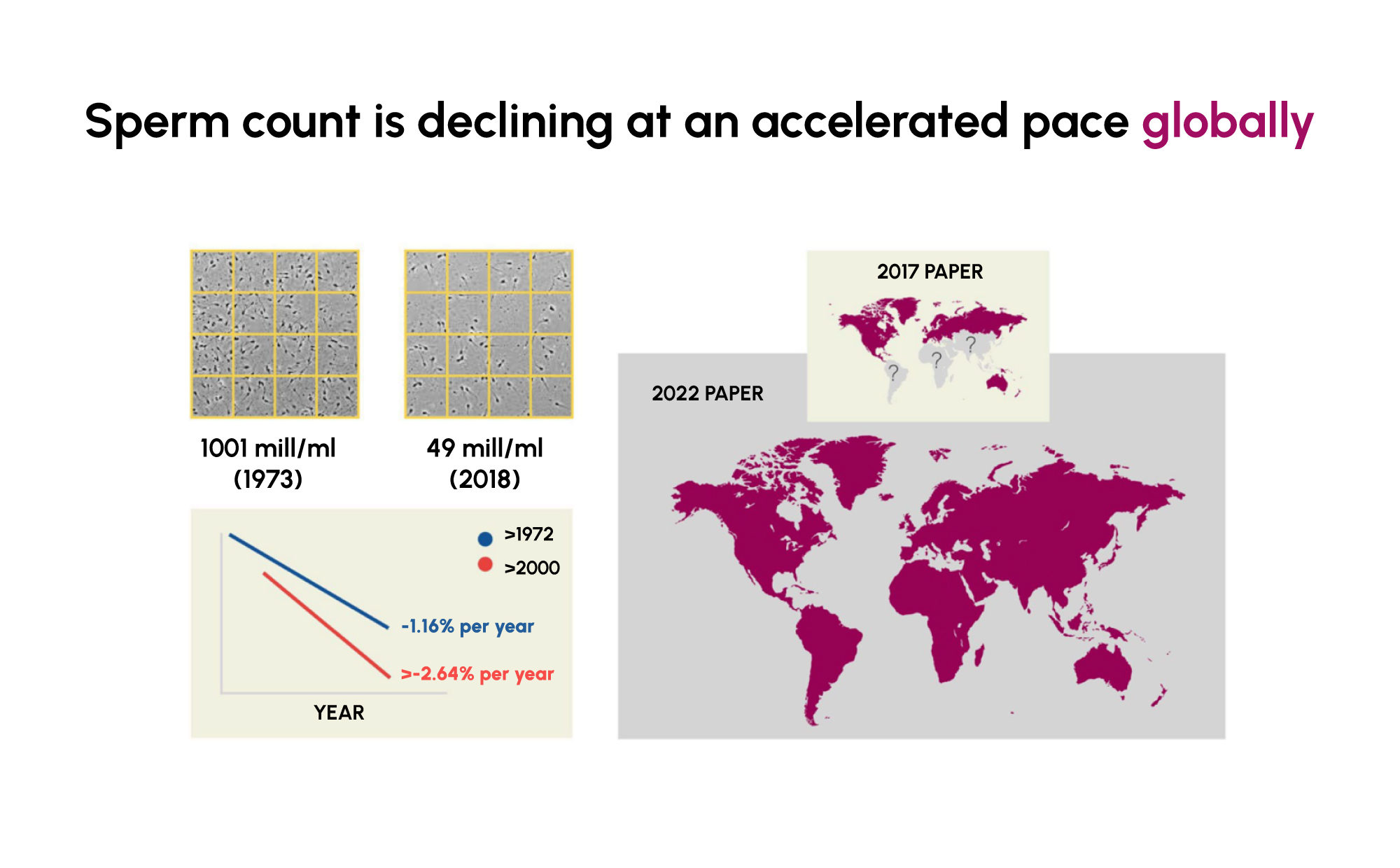
The Role of Semen Testing in Fertility Assessment
Semen analysis is widely used as part of the investigation of male reproductive function. WHO’s laboratory manual provides standardized procedures for examining human semen and aims to improve the quality and comparability of laboratory analysis.
Nevertheless, no individual semen parameter can independently establish whether a person is fertile or infertile. WHO specifically notes that semen examination results need appropriate clinical interpretation and that fertility potential ultimately concerns the couple rather than a single laboratory value.
What Can a Sperm Concentration Test Tell You?
A sperm concentration test focuses specifically on sperm concentration rather than providing a complete semen analysis. Depending on the intended use and design of the test, it can provide information about whether sperm concentration corresponds to the criterion established for that particular assay.
Male reproductive health is multifactorial. Consequently, laboratory findings gain meaning when healthcare professionals consider them alongside other relevant information. WHO’s current infertility guidance similarly supports an evidence-based and comprehensive approach to infertility evaluation and management.

What is RapidFor™ Sperm Concentration Test Kit?
The RapidFor™ Sperm Concentration Test Kit is a one-step lateral flow immunochromatographic assay intended for the qualitative assessment of sperm concentration in human semen for professional use. The test provides a preliminary screening result in approximately 5 minutes.
The assay uses monoclonal antibodies that recognize sperm-associated antigens. When the prepared semen sample is applied, the sample migrates along the membrane by capillary action and produces a visual result according to the defined cut-off. A colored Control line confirms proper test performance. Results are qualitative and should not be interpreted alone as a diagnosis of fertility or infertility.
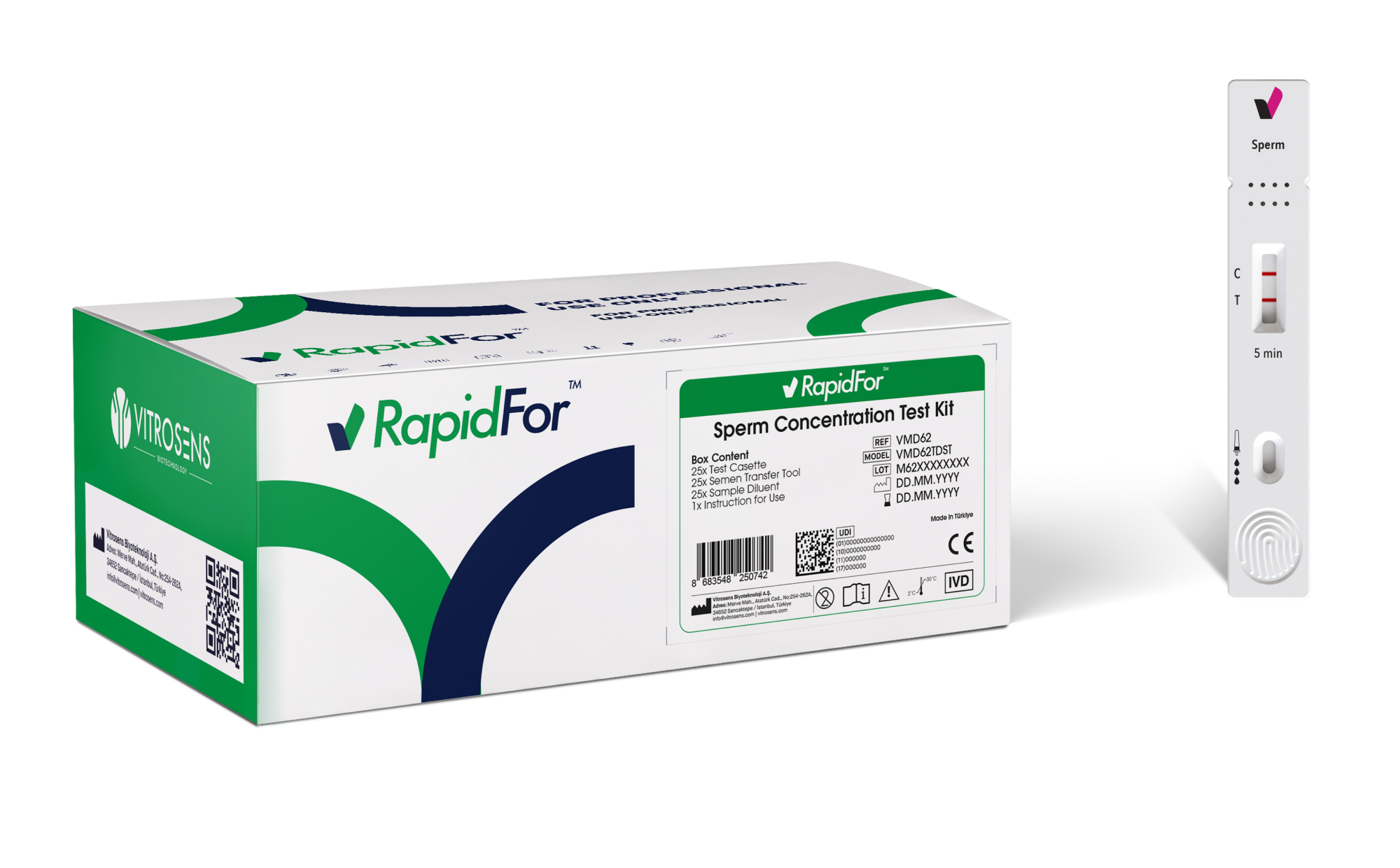
Users should follow the applicable Instructions for Use for sample collection, test procedure and interpretation. Because sperm concentration represents only one aspect of semen quality, the test result should not be interpreted alone as confirmation of fertility or infertility.
Conclusion
Sperm concentration is an important semen parameter that can contribute useful information about male reproductive health. At the same time, fertility depends on multiple biological and clinical factors, and a single sperm concentration result cannot provide a complete assessment.
A sperm concentration test can therefore serve as a focused method for evaluating this specific parameter according to the test’s intended purpose. Individuals with concerns about fertility or unexpected results should seek appropriate professional evaluation. For further information, explore the Vitrosens FIA portfolio or contact sales@vitrosens.com.
References
- World Health Organization. WHO Laboratory Manual for the Examination and Processing of Human Semen, 6th Edition. 2021.
- World Health Organization. Guideline for the Prevention, Diagnosis and Treatment of Infertility. 2025.


