

Dengue, Chikungunya and Zika are mosquito-borne viral diseases that continue to pose significant public health challenges in tropical and subtropical regions. Because these arboviruses are transmitted by the same Aedes mosquitoes and often present with similar early symptoms, laboratory confirmation plays a crucial role in accurate diagnosis and patient management.
Why These Viruses Are Difficult to Differentiate
Differentiating Dengue, Chikungunya and Zika can be challenging because these infections share several clinical and epidemiological characteristics. The viruses are primarily transmitted by Aedes mosquitoes and may circulate in the same communities during the same transmission period. Patients can present with fever, rash, headache, muscle pain, joint pain and fatigue, particularly during the early phase of illness.
Although certain features may be more strongly associated with one infection, symptoms alone may not provide sufficient certainty for accurate differentiation. Laboratory confirmation is therefore important for identifying the causative virus and supporting appropriate clinical and surveillance decisions.
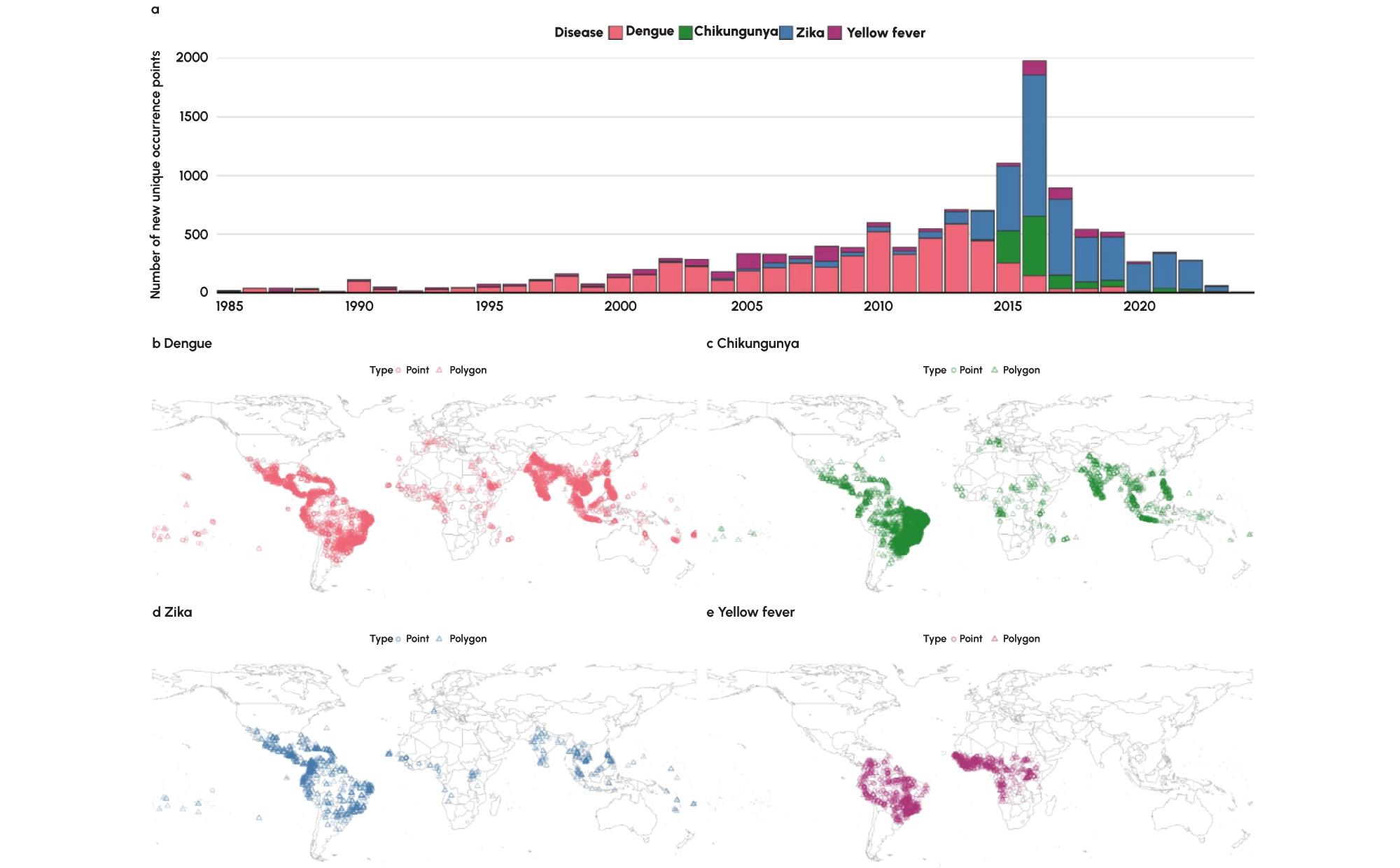
7 Reasons Molecular Testing Matters for Dengue, Chikungunya and Zika
- Clinical symptoms are remarkably similar
Early manifestations overlap considerably, making it difficult to distinguish these infections based solely on symptoms. Molecular testing provides pathogen-specific identification during the acute stage of illness.
- The same mosquito transmits all three viruses
A single mosquito species may spread multiple arboviruses within the same community. This shared transmission cycle increases the possibility of encountering different infections with nearly identical clinical presentations.
- Multiple arboviruses often circulate simultaneously
In endemic regions, Dengue, Chikungunya and Zika viruses may co-circulate during the same transmission season. Healthcare professionals must therefore consider more than one possible pathogen when evaluating suspected arboviral disease.
- Early molecular detection supports timely clinical decisions
During the first days after symptom onset, viral RNA is often detectable before antibody responses become measurable. Molecular testing helps clinicians establish an accurate diagnosis during this critical diagnostic window.
- Laboratory confirmation strengthens outbreak surveillance
Reliable molecular diagnostics support case confirmation, epidemiological investigations and monitoring of virus circulation. Accurate laboratory data also contribute to public health reporting and vector control strategies.
- Genotyping provides valuable epidemiological information
Beyond confirming infection, genotyping enables laboratories to characterize circulating viral strains. This information helps researchers monitor viral evolution, investigate transmission pathways and better understand outbreak dynamics.
- Standardized molecular workflows improve laboratory efficiency
Validated PCR assays and ready-to-use molecular reagents help laboratories achieve consistent performance while simplifying workflow management. Standardization becomes especially important during periods of increased testing demand.
Two Formats, One Molecular Testing Strategy
Reliable molecular diagnostics require not only well-designed assays but also workflow flexibility to meet the operational needs of different laboratories. Vitrosens offers complementary molecular testing solutions for the detection and genotyping of Dengue, Chikungunya and Zika viruses through its ChainFor™ and LyoSens™ product families.
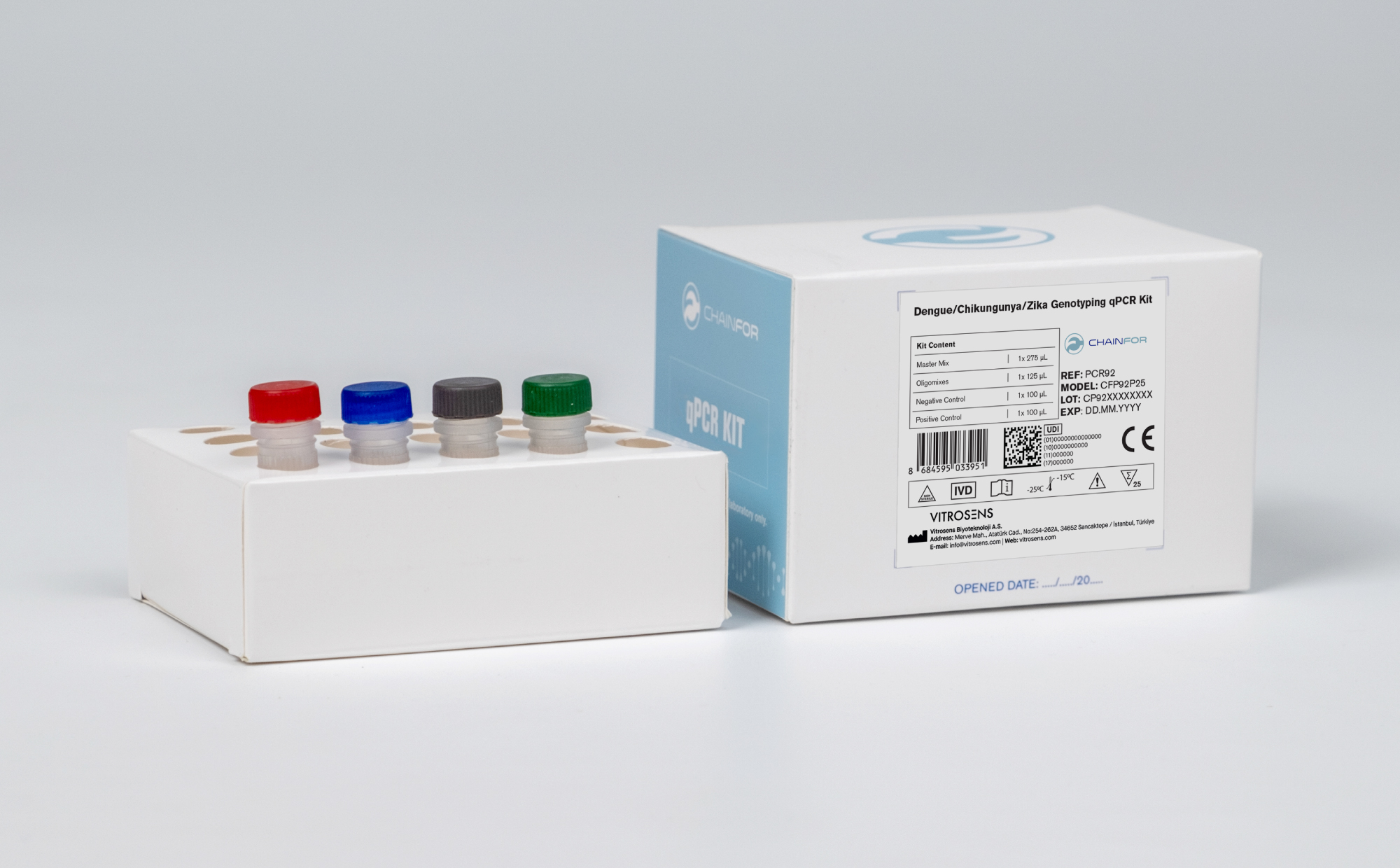
The ChainFor™ Dengue/Chikungunya/Zika Genotyping qPCR Kit provides a conventional real-time PCR workflow for laboratories operating within standard cold-chain logistics. Designed for professional molecular diagnostics, it supports sensitive and reliable detection while enabling viral genotyping for epidemiological investigations and outbreak monitoring.
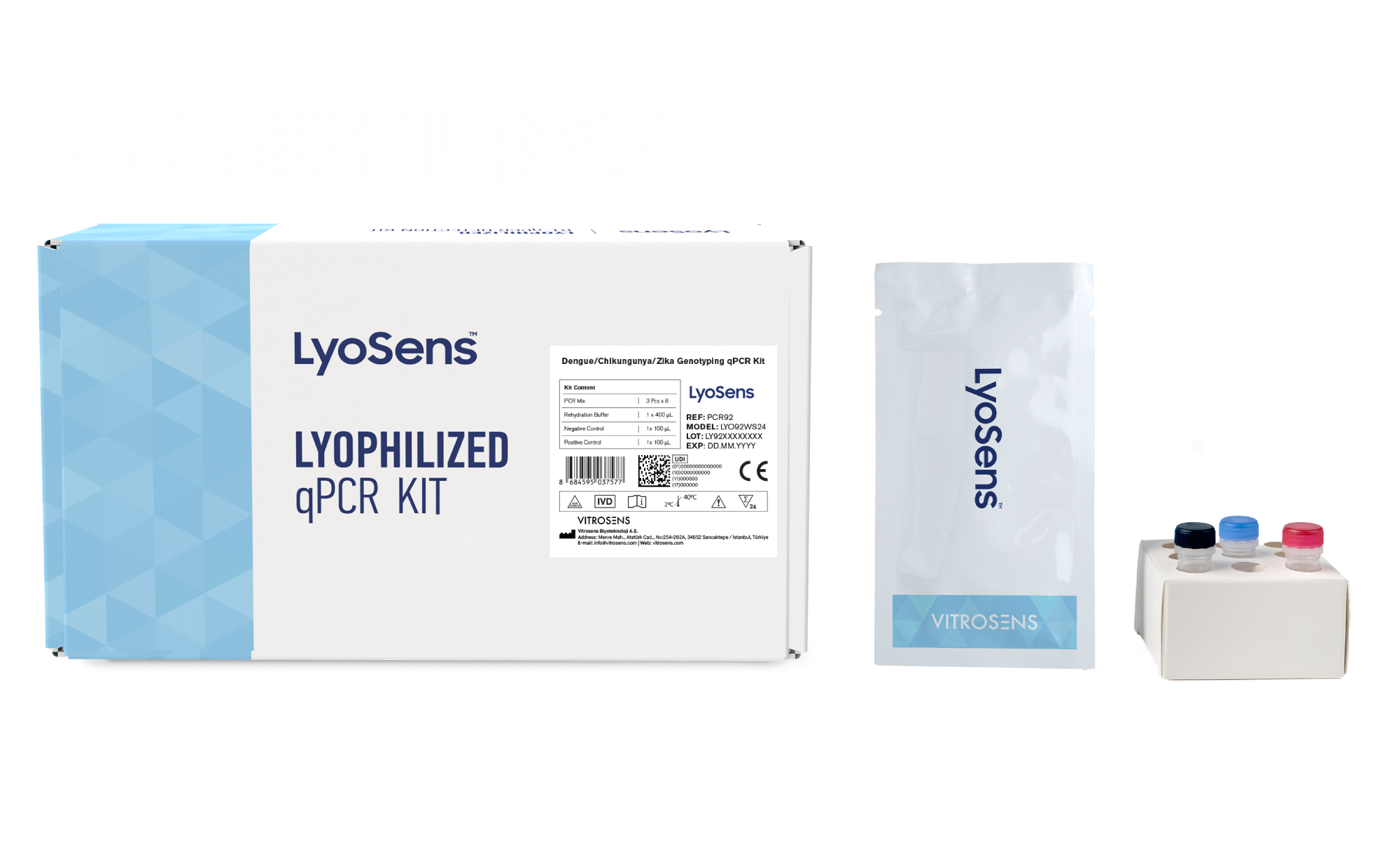
For laboratories seeking greater flexibility in storage, transportation and routine operation, the LyoSens™ Dengue/Chikungunya/Zika Genotyping qPCR Kit offers the same molecular testing principle in a lyophilized format. Ready-to-use lyophilized reagents help simplify assay preparation, minimize handling steps and improve workflow consistency, making them particularly suitable for laboratories where cold-chain management may be challenging.
Conclusion
As Dengue, Chikungunya and Zika continue to circulate in many parts of the world, accurate laboratory diagnosis remains essential for effective patient management and public health surveillance. Because these arboviruses share transmission vectors and overlapping clinical presentations, molecular testing plays a central role in distinguishing infections during the acute phase.
Discover how ChainFor™ & LyoSens™ Dengue/Chikungunya/Zika Genotyping qPCR Kit supports fast, quantitative AMH measurement for professional laboratory workflows. Contact sales@vitrosens.com or explore the complete Vitrosens molecular diagnostic solutions.
References
- European Centre for Disease Prevention and Control (ECDC). Mosquito-borne diseases in Europe.
- World Health Organization (WHO). Dengue and severe dengue.
- World Health Organization (WHO). Zika virus.
- Centers for Disease Control and Prevention (CDC). Clinical Overview of Chikungunya.


