

Recent public health events continue to highlight the importance of Legionella surveillance. In July 2026, New York City health officials investigated a Legionnaires’ disease outbreak in Central Harlem, resulting in dozens of confirmed cases before the outbreak was declared over following environmental investigations and control measures.
What Is Legionella pneumophila?
Legionella pneumophila is a bacterium that can cause serious respiratory infections, particularly Legionnaires’ disease, a severe form of pneumonia. Because the clinical symptoms often resemble those of other respiratory infections, laboratory testing plays an important role in the overall clinical evaluation of suspected cases.
Legionella pneumophila is commonly found in natural and man-made water systems, including cooling towers, plumbing systems and water storage facilities. Infection occurs when contaminated water droplets are inhaled into the lungs. The disease is not transmitted from person to person under normal circumstances.

Individuals with advanced age, chronic lung disease, weakened immune systems or a history of smoking may have a higher risk of developing severe illness.
What Diseases Can Legionella Cause?
Legionella infection may present in two different forms:
- Legionnaires’ disease, a potentially severe pneumonia that may require hospitalization.
- Pontiac fever, a milder flu-like illness that usually resolves without pneumonia.
Common symptoms of Legionnaires’ disease may include:
• Fever
• Cough
• Shortness of breath
• Muscle aches
• Headache
Because these symptoms overlap with many other respiratory infections, clinical findings alone are not sufficient to identify the causative organism. Healthcare professionals evaluate patients using clinical assessment together with appropriate laboratory testing.
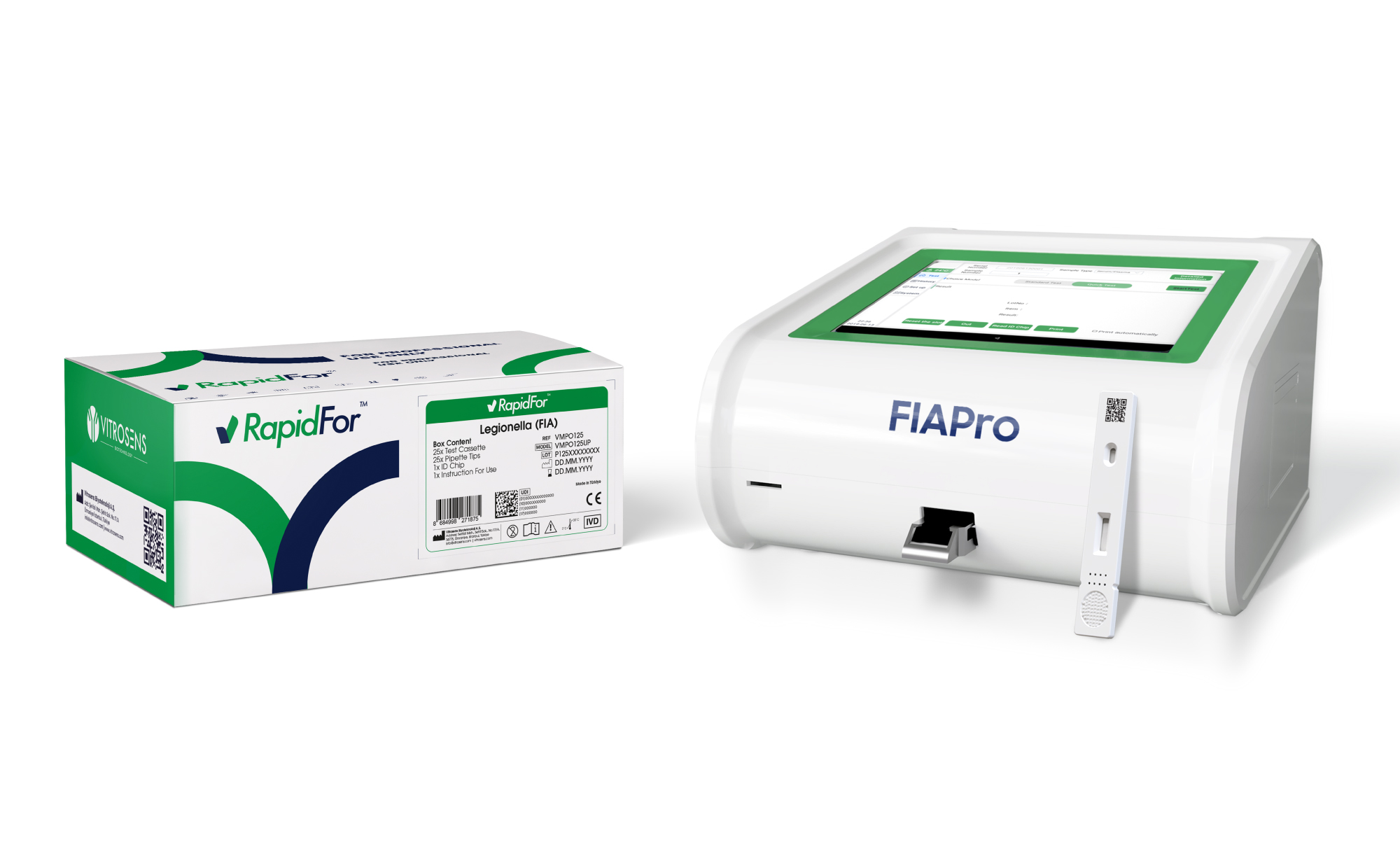
Product Spotlight: RapidFor™ Legionella (FIA)
The RapidFor™ Legionella (FIA) is designed for the quantitative determination of Legionella pneumophila antigen in human urine as an aid to laboratory testing in professional healthcare settings.
Performed on the FIAPro Immunofluorescence Analyzer, the assay uses fluorescence immunoassay technology to provide quantitative analyzer-based results suitable for routine laboratory workflows.
Conclusion
Legionnaires’ disease remains an important cause of community- and healthcare-associated pneumonia. Because its symptoms are often non-specific, laboratory evaluation plays an important role in the overall clinical assessment of suspected cases.
To learn more about the RapidFor™ Legionella (FIA) and the complete Vitrosens fluorescence immunoassay portfolio contact sales@vitrosens.com or explore our FIA products.
References
World Health Organization (WHO). Legionellosis.
Centers for Disease Control and Prevention (CDC). Legionella (Legionnaires’ Disease and Pontiac Fever).
European Centre for Disease Prevention and Control (ECDC). Legionnaires’ Disease.


