

Influenza is a contagious respiratory infection that affects millions of people worldwide each year. Although influenza A and influenza B are both responsible for seasonal flu outbreaks, they differ in their viral classification, genetic characteristics and epidemiological patterns.
A common question during respiratory infection season is: What is the difference between influenza A and B?
What Are Influenza A and Influenza B?
According to the Centers for Disease Control and Prevention (CDC), influenza viruses are classified into four types: A, B, C and D. Among these, influenza A and B are the primary causes of seasonal influenza outbreaks in humans.
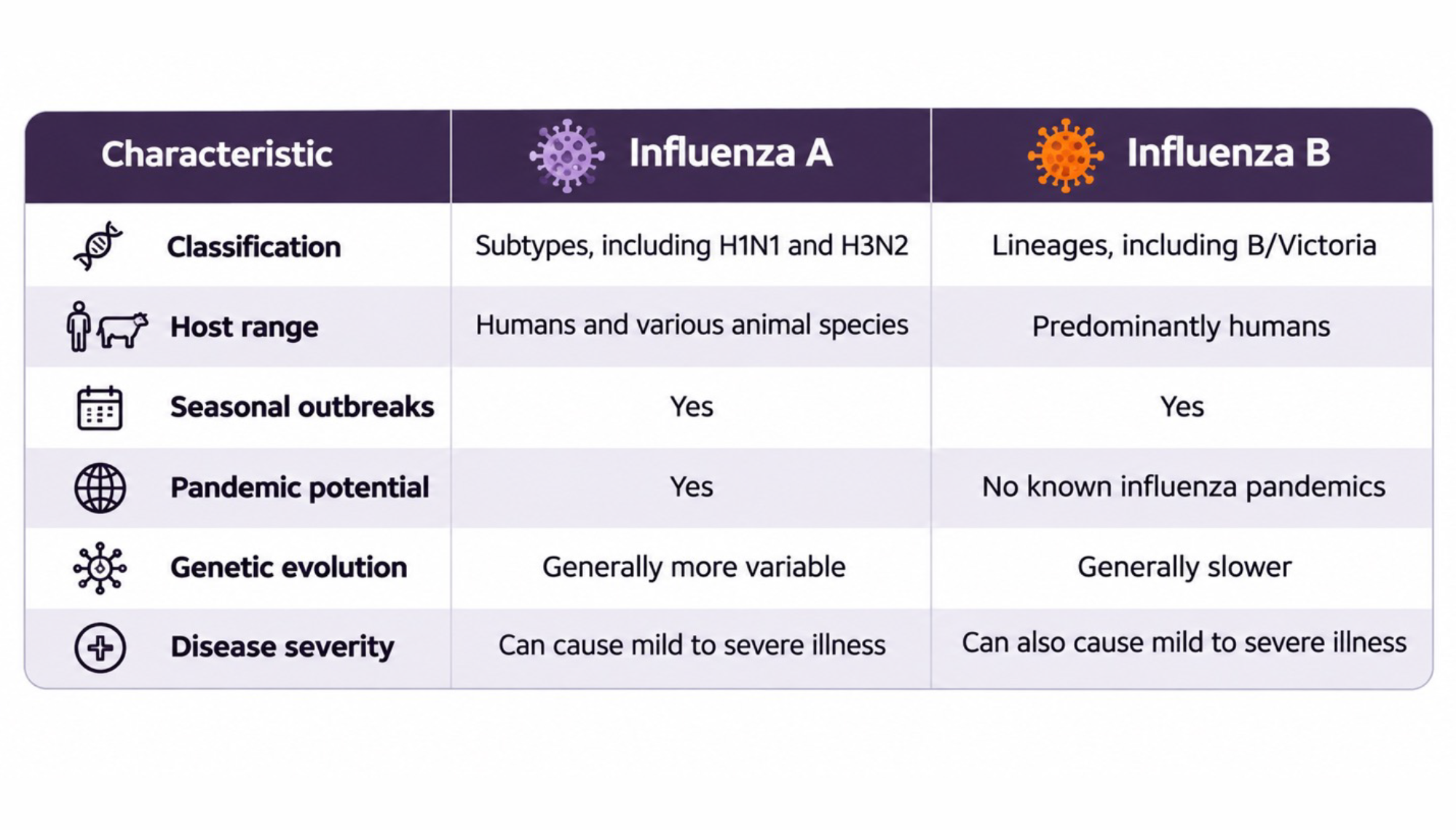
Influenza A viruses are divided into subtypes based on two surface proteins: hemagglutinin (H) and neuraminidase (N). Common seasonal subtypes include A(H1N1) and A(H3N2).
Influenza B viruses are not divided into subtypes. Instead, they are classified into genetic lineages, historically including B/Victoria and B/Yamagata. However, B/Yamagata viruses have not been confirmed in circulation since March 2020.
What Is the Difference Between Influenza A and B?
The main difference between influenza A and influenza B lies in their viral diversity, host range and pandemic potential.
- Influenza A viruses infect humans and several animal species, including birds and pigs.
- Influenza B viruses circulate predominantly among humans and generally undergo genetic changes more slowly than influenza A viruses.
Most importantly, influenza A is the only influenza type known to have caused influenza pandemics, while both influenza A and B contribute to seasonal epidemics.
Are Flu A and Flu B Symptoms Different?
In practice, flu A and flu B symptoms are very similar, making it difficult to distinguish between them based on clinical presentation alone.
Common symptoms include fever or chills, cough, sore throat, muscle aches, headache, fatigue and nasal congestion. Some individuals, particularly children, may also experience vomiting or diarrhea.
Both influenza types can cause complications, including pneumonia and worsening of underlying medical conditions. Although the severity of seasonal outbreaks may vary, influenza B should not automatically be considered milder than influenza A.
Why Is Differentiating Influenza A and B Important?
Identifying influenza virus types can contribute to laboratory investigation, epidemiological surveillance and respiratory infection monitoring.
Influenza A and B may circulate simultaneously during seasonal outbreaks, while other respiratory pathogens, including RSV and SARS-CoV-2, can produce similar symptoms.

However, influenza testing is not necessary for every patient with flu-like symptoms, and clinical decisions should follow established healthcare guidance.
Vitrosens Influenza Diagnostic Solutions
Vitrosens offers a range of respiratory diagnostic solutions across rapid antigen testing, fluorescence immunoassay (FIA) and molecular diagnostics (qPCR).
Technology | Product Name |
Rapid Tests (LFA) | Influenza A/B Test Kit |
FLU A/B + RSV Test Kit | |
SARS-CoV-2 + FLU A/B + RSV Test Kit | |
Fluorescence Immunoassay (FIA) | Influenza A/B (FIA) |
Molecular Diagnostics (qPCR) | FLU A + B qPCR Kit |
FLU A/B Genotyping qPCR Kit | |
SARS-CoV-2/FLU/RSV Genotyping qPCR Kit |
Vitrosens offers assays targeting influenza A and B, as well as molecular tests designed to identify specific influenza A subtypes and multiplex panels covering additional respiratory pathogens.
Technology | Product Name |
Rapid Tests (LFA) | Influenza A H5 Test Kit |
Fluorescence Immunoassay (FIA) | Influenza A/B (FIA) |
Molecular Diagnostics (qPCR) | FLU A ID-4 Genotyping qPCR Kit |
FLU ID-3 Genotyping qPCR Kit | |
H1Nx qPCR Kit | |
H1N1 qPCR Kit |
Product selection, specimen requirements and result interpretation should follow the respective Instructions for Use.
Conclusion
Influenza A is associated with seasonal epidemics and has pandemic potential, while influenza B contributes to seasonal epidemics without a known history of causing pandemics.
Despite these differences, both viruses can cause significant respiratory illness, and their symptoms cannot be reliably distinguished without appropriate laboratory investigation. To learn more about Vitrosens respiratory diagnostic solutions, contact sales@vitrosens.com.
References
- Centers for Disease Control and Prevention (CDC). Types of Influenza Viruses.
- Centers for Disease Control and Prevention (CDC). About Influenza.
- World Health Organization (WHO). Influenza: Vaccine Standardization and Viral Characteristics.


