

Fertility assessment often begins with understanding ovarian reserve, and one of the most informative biomarkers is Anti-Müllerian Hormone (AMH). Produced by small ovarian follicles, AMH provides valuable insight into a woman’s remaining egg supply and is widely used in reproductive medicine. Rapid and reliable AMH testing supports healthcare professionals in making informed clinical decisions during fertility evaluation.
What Is Anti-Müllerian Hormone (AMH)?
Anti-Müllerian Hormone (AMH) is produced by granulosa cells of small growing ovarian follicles. Because AMH reflects the number of developing follicles, it serves as an indirect indicator of ovarian reserve, helping healthcare professionals evaluate reproductive potential.
Unlike several reproductive hormones that fluctuate significantly during the menstrual cycle, AMH concentrations are generally more stable, making the AMH test a practical biomarker for ovarian reserve assessment. For this reason, AMH measurement is commonly included in fertility evaluations, assisted reproductive technology (ART) planning and ovarian response prediction.
Why Is AMH Testing Important?
AMH testing provides valuable information in several clinical situations, including:
• Assessment of ovarian reserve
• Fertility evaluation
• In vitro fertilization (IVF) planning
• Prediction of ovarian response to stimulation
• Evaluation of premature ovarian insufficiency
• Support in the assessment of polycystic ovary syndrome (PCOS)
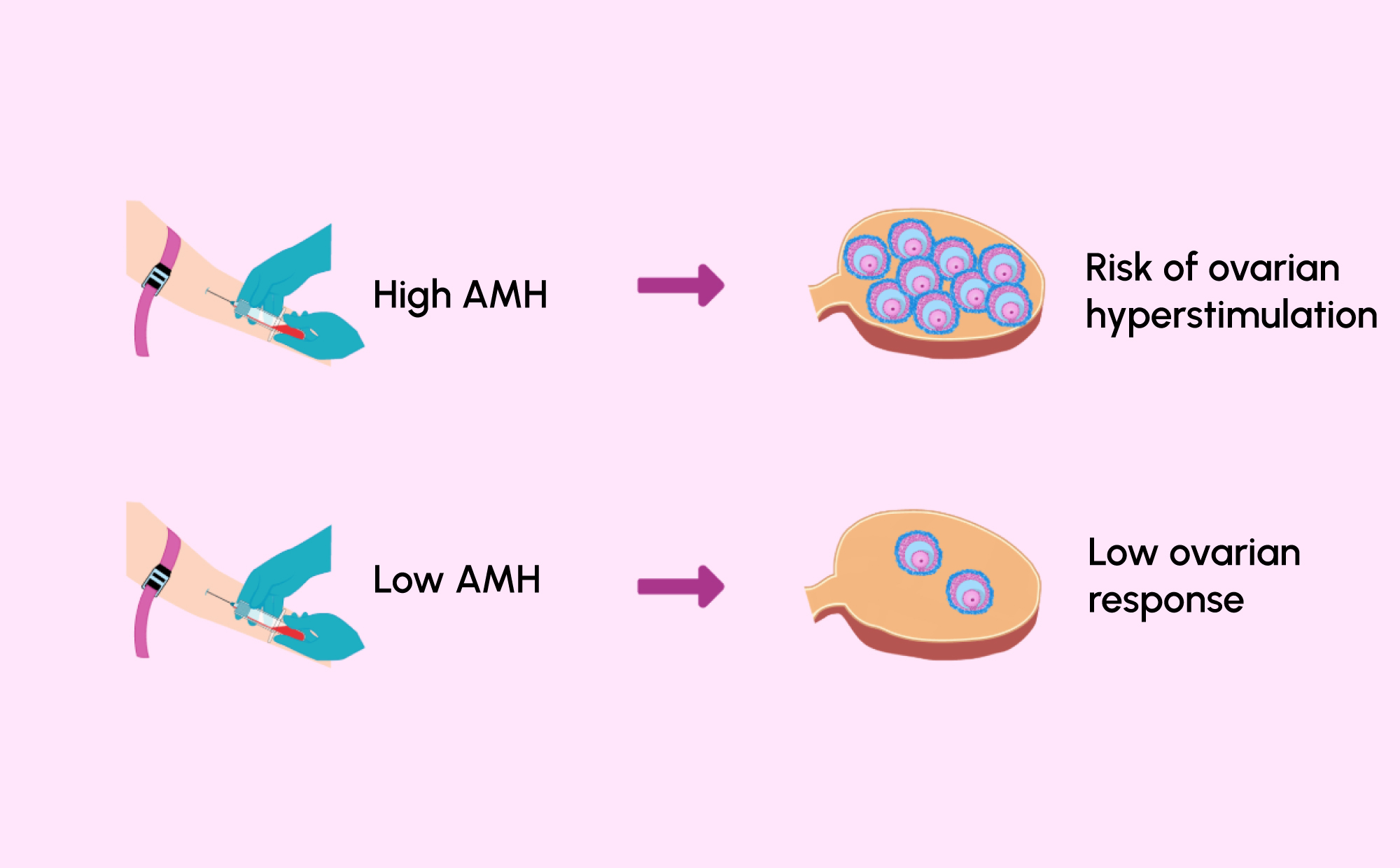
Higher AMH concentrations are generally associated with a greater number of recruitable follicles and an increased likelihood of an excessive ovarian response during assisted reproductive treatments, while lower AMH levels may indicate diminished ovarian reserve and a reduced ovarian response. AMH should always be interpreted together with age, ultrasound findings, and other clinical parameters.
AMH and PCOS: Understanding the Connection
Polycystic ovary syndrome (PCOS) is one of the most common endocrine disorders affecting women of reproductive age. According to the World Health Organization (WHO), PCOS affects an estimated 10-13% of women of reproductive age, yet many cases remain undiagnosed.
Women with PCOS frequently have higher AMH concentrations because the condition is often associated with an increased number of small antral follicles, which produce Anti-Müllerian Hormone. However, elevated AMH levels alone cannot confirm or exclude PCOS. International clinical guidelines emphasize that PCOS diagnosis should be based on a comprehensive assessment that includes medical history, clinical presentation, hormonal evaluation and ultrasound findings when appropriate.

Although elevated AMH levels are frequently observed in women with PCOS due to an increased number of small ovarian follicles, AMH alone is not sufficient to establish a diagnosis. Instead, it serves as a valuable biomarker that complements clinical evaluation, hormonal assessment, and ultrasound findings in reproductive medicine.
Product Spotlight: RapidFor™ AMH (FIA)
As demand for standardized fertility biomarkers continues to grow, laboratories require testing solutions that combine analytical performance with operational efficiency. The RapidFor™ AMH (FIA) has been developed to deliver accurate quantitative Anti-Müllerian Hormone measurement through fluorescence immunoassay technology, enabling healthcare professionals to integrate reliable AMH assessment into routine reproductive health workflows.
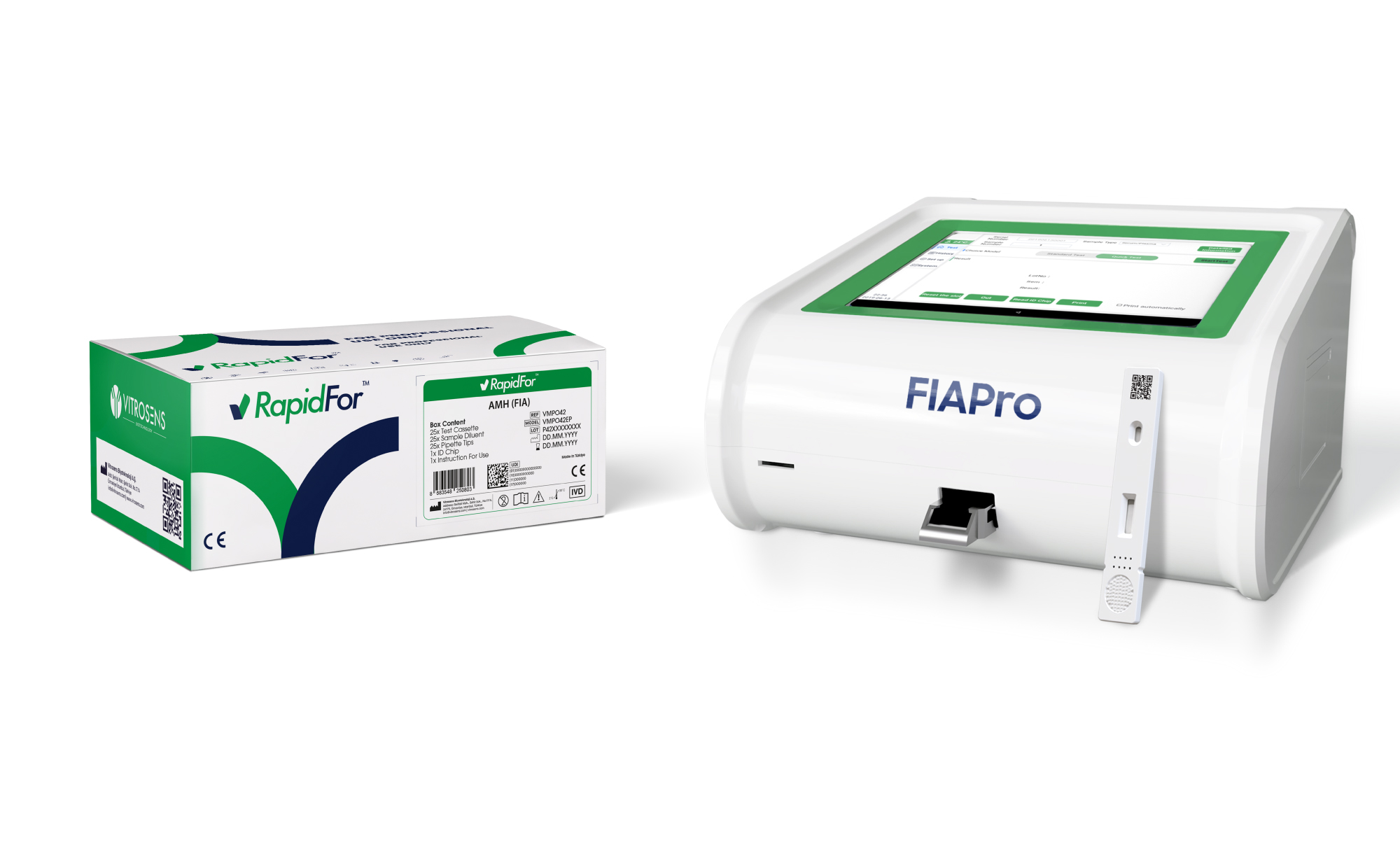
Compatible with human serum, plasma and whole blood, the assay is performed on the Immunofluorescence Analyzer using a fluorescence immunochromatographic double-antibody sandwich method. Quantitative results are available in approximately 15 minutes, supporting efficient laboratory operations without compromising analytical quality.
Conclusion
Anti-Müllerian Hormone has become an important laboratory biomarker for assessing ovarian reserve and supporting fertility evaluation. Reliable quantitative AMH testing can support healthcare professionals in reproductive medicine and women’s health.
Discover how RapidFor™ AMH (FIA) supports fast, quantitative AMH measurement for professional laboratory workflows. Contact sales@vitrosens.com to learn more about FIA Testing products of Vitrosens Biotechnology.
References
- World Health Organization (WHO). Polycystic ovary syndrome (PCOS) Fact Sheet, 2026.
- American Society for Reproductive Medicine (ASRM). Testing and Interpreting Measures of Ovarian Reserve.
- European Society of Human Reproduction and Embryology (ESHRE). International Evidence-Based Guideline for the Assessment and Management of Polycystic Ovary Syndrome.
- American College of Obstetricians and Gynecologists (ACOG). Evaluating Infertility.
- Centers for Disease Control and Prevention (CDC). Infertility.
- National Institute for Health and Care Excellence (NICE). Fertility Problems: Assessment and Treatment.


