

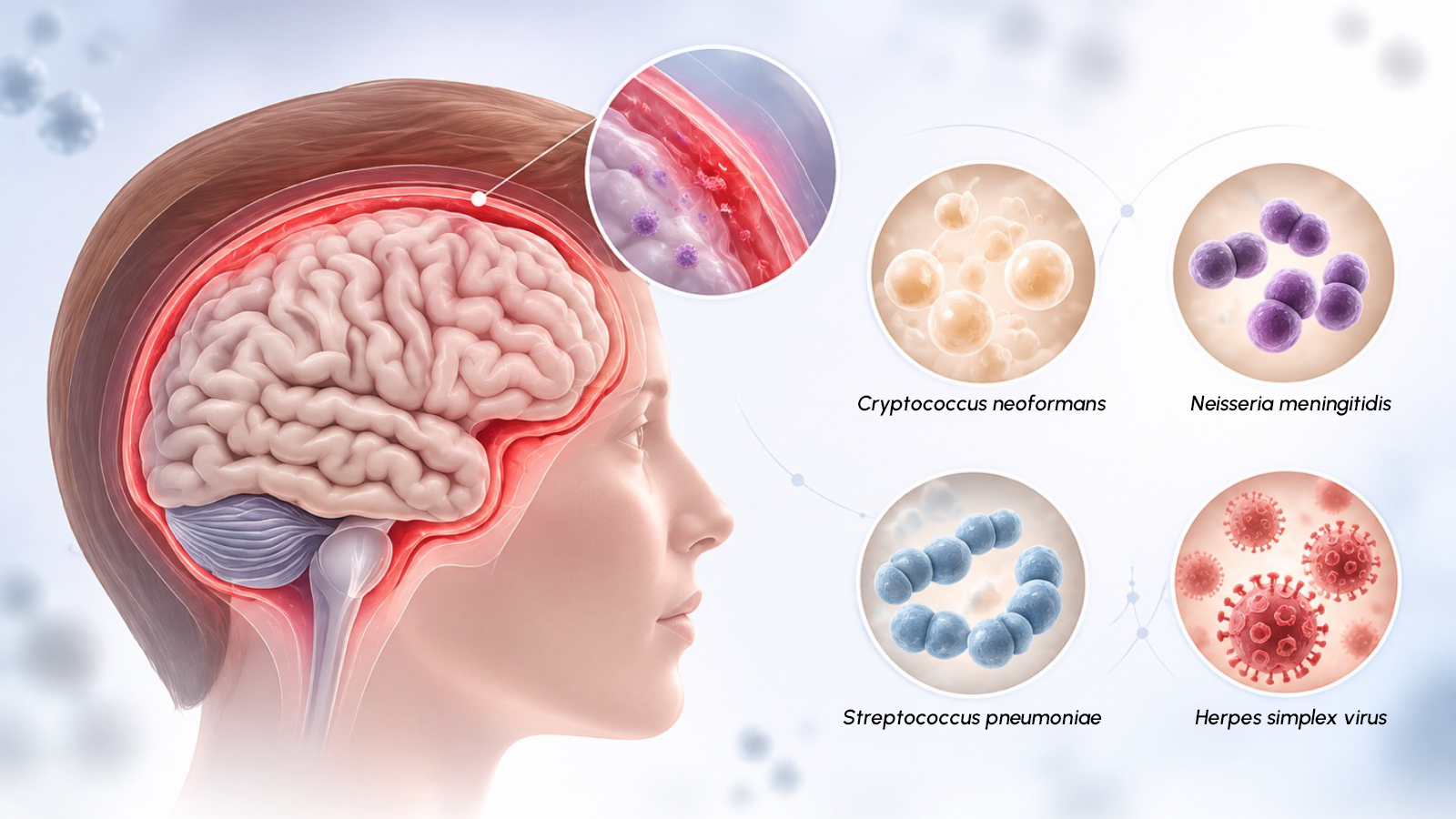
Every year on October 5, World Meningitis Day draws attention to meningitis, its symptoms, prevention and the importance of appropriate diagnosis. Meningitis is inflammation of the protective membranes surrounding the brain and spinal cord, and it can have several infectious causes, including bacteria, viruses, fungi and parasites.
Because different pathogens can be associated with meningitis and clinical presentations may overlap, identifying the causative pathogen is an important part of laboratory investigation. Molecular methods such as real-time PCR can provide pathogen-specific information as part of the diagnostic workflow.
What Causes Meningitis?
Meningitis is not associated with a single pathogen. According to the World Health Organization (WHO), infectious meningitis may be caused by bacteria, viruses, fungi and parasites.
Bacterial meningitis is of particular concern because of its potential severity. Major causes of acute bacterial meningitis include Neisseria meningitidis, Streptococcus pneumoniae, Haemophilus influenzae andStreptococcus agalactiae, also known as Group B Streptococcus.
However, other microorganisms may also be relevant depending on factors such as patient age, immune status and epidemiological context. Viral causes can include enteroviruses and herpesviruses, while Cryptococcus species are among the organisms associated with fungal meningitis.
Therefore, laboratory investigation requires consideration of the possible causative agents rather than treating meningitis as a single-pathogen infection.
Why Is Pathogen Identification Important in Meningitis?
Common signs and symptoms of meningitis can include fever, headache, neck stiffness, altered mental status, nausea, vomiting and sensitivity to light. However, clinical presentation alone cannot reliably determine the microorganism responsible for an infection.
Identifying the causative pathogen can provide important information for clinical and laboratory evaluation. It also contributes to epidemiological investigation and disease surveillance.
WHO states that laboratories may perform specific tests on cerebrospinal fluid (CSF) or blood to identify the pathogen causing meningitis. The diagnostic approach may involve several complementary laboratory methods depending on the suspected cause and clinical context.
The Role of Molecular Testing in Meningitis Investigation
Real-time polymerase chain reaction, or qPCR, enables the detection of specific nucleic acid targets associated with microorganisms.
In meningitis investigation, molecular testing can support pathogen identification by detecting defined microbial targets according to the design and intended use of the assay. Multiplex approaches can be particularly relevant when several possible pathogens need to be considered within the same clinical presentation.
Two PCR Formats for Different Laboratory Workflows
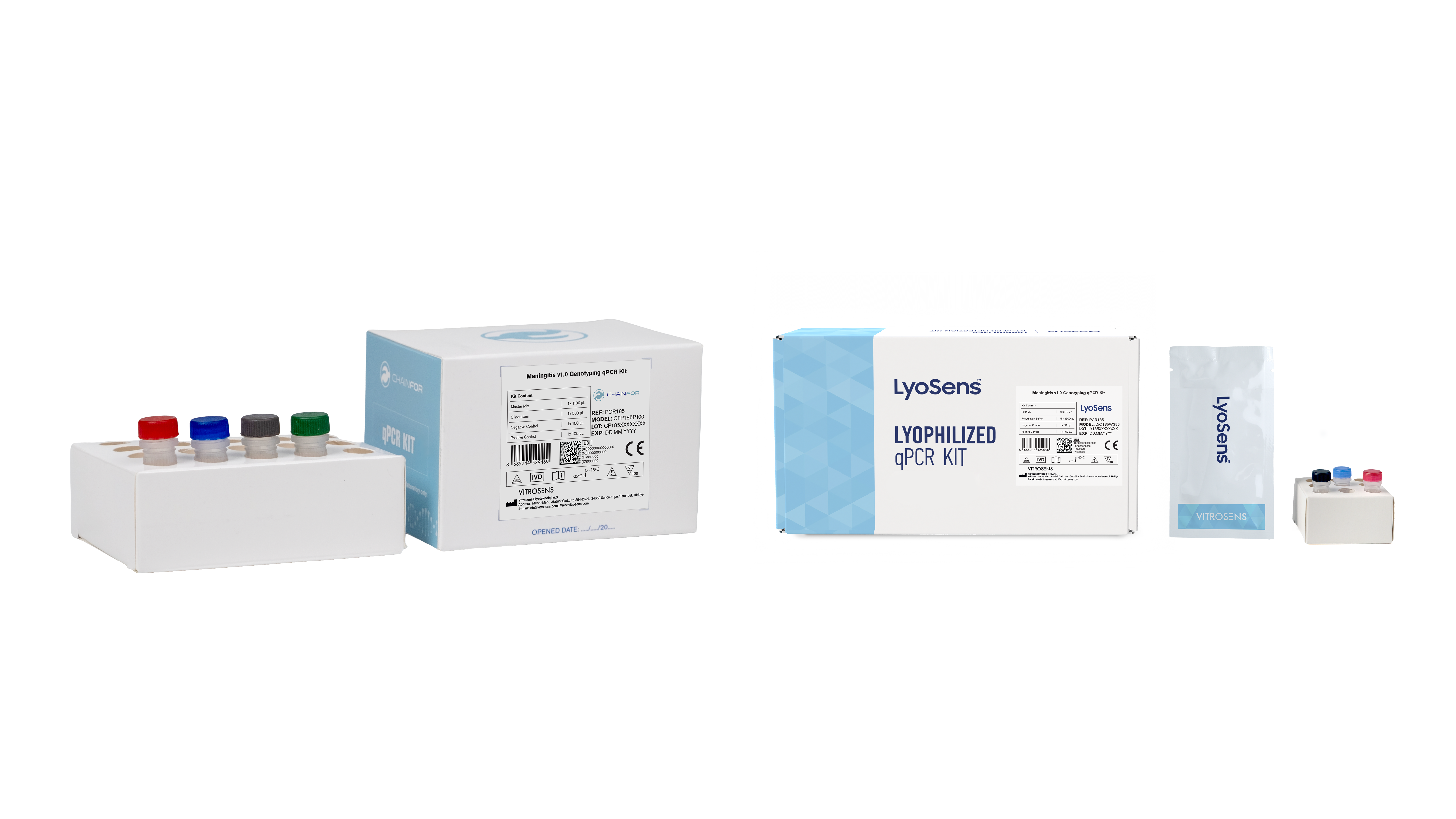
Vitrosens offers molecular diagnostic assays in both ChainFor™ and LyoSens™ formats, providing laboratories with alternative reagent configurations for real-time PCR workflows.
ChainFor™ represents the conventional liquid-format real-time PCR solution.
LyoSens™, in contrast, uses lyophilized, or freeze-dried, PCR reagents. Lyophilization removes moisture from reagents under controlled conditions to create a dry reagent format designed to support practical storage, transportation and laboratory handling according to individual product specifications.
Both approaches are intended to support molecular laboratory workflows while providing different reagent configurations. Preparation procedures, storage conditions, compatible instruments and testing requirements remain product-specific and should always follow the applicable Instructions for Use.
Product Focus: Meningitis v1.0 Genotyping qPCR Kit
The Meningitis v1.0 Genotyping qPCR Kit is part of the Vitrosens molecular diagnostics portfolio and is available in ChainFor™ and LyoSens™ formats. The assay is designed for molecular detection and genotyping of defined meningitis-associated targets according to its intended use.
- Bacteria:
Streptococcus pneumoniae, Streptococcus agalactiae, Listeria monocytogenes, Neisseria meningitidis, Haemophilus influenzae, Escherichia coli K1 - Fungi:
Cryptococcus gattii/neoformans - Virus:
Herpes Simplex Virus 1, Herpes Simplex Virus 2, Human Herpesvirus 6, Human Herpesvirus 7, Human Herpesvirus 8, Human Parechovirus, Enterovirus, Varicella-Zoster Virus, CMV
The availability of both conventional liquid and lyophilized reagent formats provides laboratories with alternative configurations for different molecular testing workflows.
Specimen requirements, extraction procedures, reagent preparation, amplification conditions, controls and interpretation of results should follow the applicable Instructions for Use for the selected product format.
Why Lyophilized PCR Reagents?
Lyophilization, also known as freeze-drying, removes water from PCR reagents under controlled conditions and creates a dry reagent format.
Vitrosens offers lyophilized molecular assays under the LyoSens™ portfolio. Depending on the individual product specifications, this format can support practical reagent preparation, storage and transportation within molecular laboratory workflows.
World Meningitis Day: Awareness Beyond October 5
World Meningitis Day provides an opportunity to increase awareness of a disease that remains a major global public health challenge.
The WHO Defeating Meningitis by 2030 global road map identifies diagnosis and treatment as one of five interconnected pillars, alongside prevention and epidemic control, disease surveillance, care and support, and advocacy and engagement.
Real-time PCR offers a molecular approach for detecting defined pathogen targets, while complementary laboratory methods remain important depending on the clinical situation To learn more about Vitrosens molecular diagnostic solutions, explore the Vitrosens portfolio or contact sales@vitrosens.com.
References
- World Health Organization (WHO). Meningitis – Fact Sheet. Updated 29 September 2026.
- World Health Organization (WHO). WHO Practical Manual on Meningitis Diagnosis, Treatment and Care. 2026.
- World Health Organization (WHO). Defeating Meningitis by 2030: A Global Road Map.
- Centers for Disease Control and Prevention (CDC). About Meningitis. 2025.


