

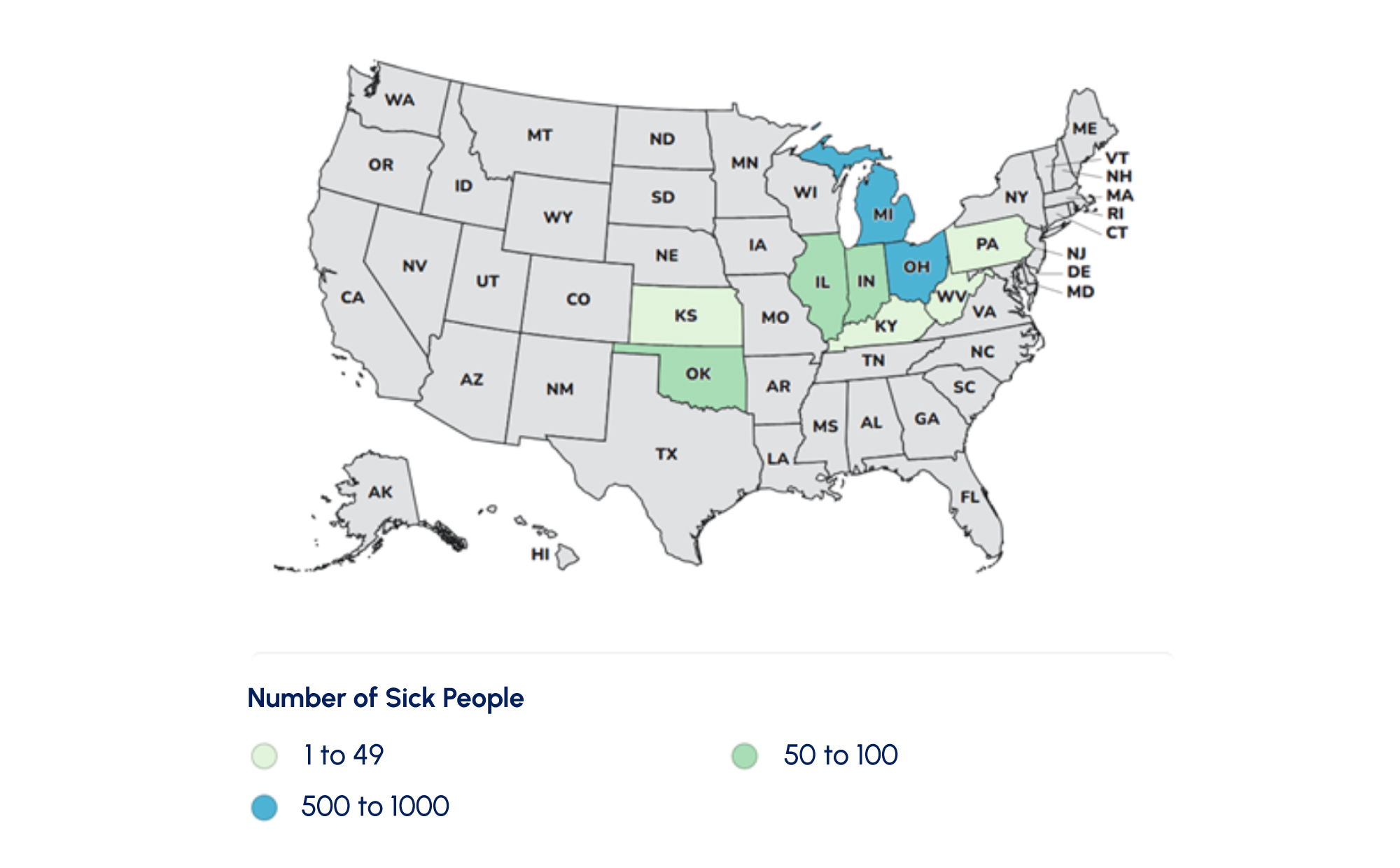
The recent multistate outbreak of Cyclospora cayetanensis has drawn renewed attention to foodborne gastrointestinal infections and the challenges they present in clinical practice. According to the Centers for Disease Control and Prevention (CDC), the outbreak has been associated through epidemiological and traceback investigations with recalled iceberg lettuce distributed across multiple US states.
Because the symptoms of cyclosporiasis overlap with many bacterial, viral and parasitic gastrointestinal infections, laboratory evaluation plays an important role in supporting clinical assessment and public health surveillance.
A Multistate Outbreak Highlights an Ongoing Public Health Challenge
Foodborne outbreaks continue to demonstrate how rapidly gastrointestinal pathogens can spread through widely distributed fresh produce. In July 2026, the CDC expanded its investigation of a multistate Cyclospora outbreak after additional cases were identified across several states.
As of the latest CDC update, nearly 2,000 laboratory-confirmed cases and almost 100 hospitalizations have been reported. While most patients recover completely, the outbreak illustrates how foodborne parasites can affect large populations and require coordinated epidemiological investigations.
What Is Cyclospora cayetanensis?
Cyclospora cayetanensis is a microscopic protozoan parasite that causes cyclosporyasis, an intestinal infection transmitted primarily through contaminated food or water.
Unlike many bacterial causes of gastroenteritis, Cyclospora cannot be transmitted directly from one person to another immediately after being shed because the parasite requires time in the environment before becoming infectious. Fresh produce contaminated before consumption has been associated with numerous outbreaks worldwide.
Symptoms generally develop about one week after exposure and may persist for several weeks if left untreated.
Mother-to-child transmission prevention depends on early identification and continuous care. Cyclosporiasis often presents with symptoms that resemble many other gastrointestinal infections, making clinical differentiation challenging.
Common symptoms include:
- Prolonged watery diarrhea
- Abdominal cramps
- Nausea
- Fatigue
- Loss of appetite
- Weight loss
- Low-grade fever
- Bloating
Because these symptoms are not specific to Cyclospora infection, healthcare professionals consider clinical history, food exposure, travel history and laboratory findings together during patient evaluation.
The Role of Laboratory Evaluation
The source of an outbreak and the evaluation of affected patients involve different laboratory approaches. While food safety investigations focus on identifying contamination in food products and tracing the source of an outbreak, clinical laboratories evaluate stool specimens to investigate the causative pathogen in symptomatic patients. The CDC notes that Cyclospora may not be included in every routine stool examination or molecular gastrointestinal panel, making awareness of available laboratory methods important when evaluating patients with prolonged diarrheal illness.
The Vitrosens Gastroenteritis ID-23 Genotyping qPCR Kit is designed for the qualitative detection and differentiation of multiple gastrointestinal pathogens associated with infectious gastroenteritis using real-time PCR technology.
- Designed for the qualitative detection and differentiation of 23 gastrointestinal pathogens by real-time PCR, the kit enables simultaneous molecular detection of bacterial, viral and parasitic targets within a single testing workflow.
- The panel includes clinically relevant pathogens associated with infectious gastroenteritis, such as Cyclospora cayetanensis, Giardia lamblia, Cryptosporidium spp., Salmonella spp., Campylobacter spp., Norovirus, Rotavirus, Adenovirus and additional gastrointestinal pathogens.
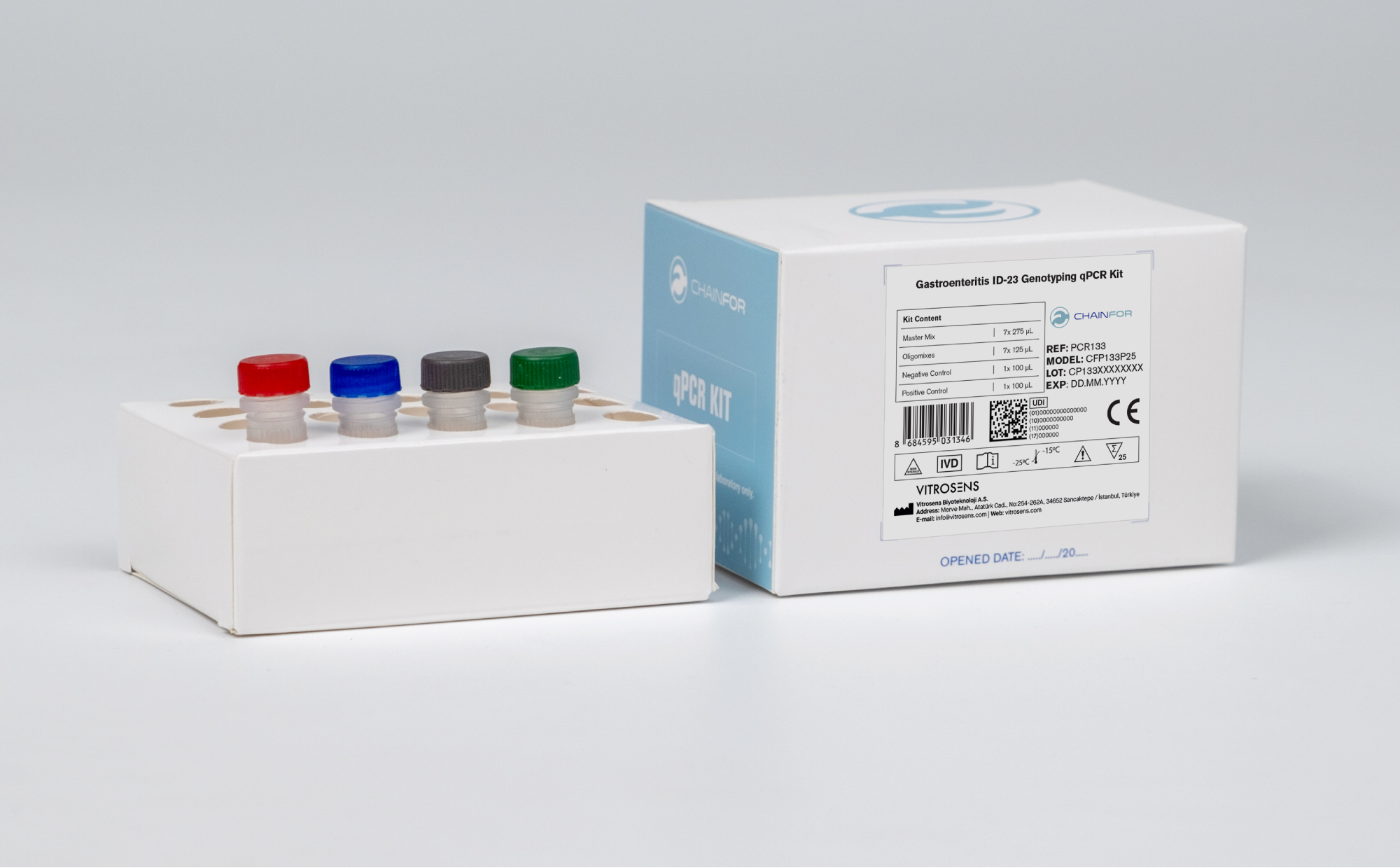
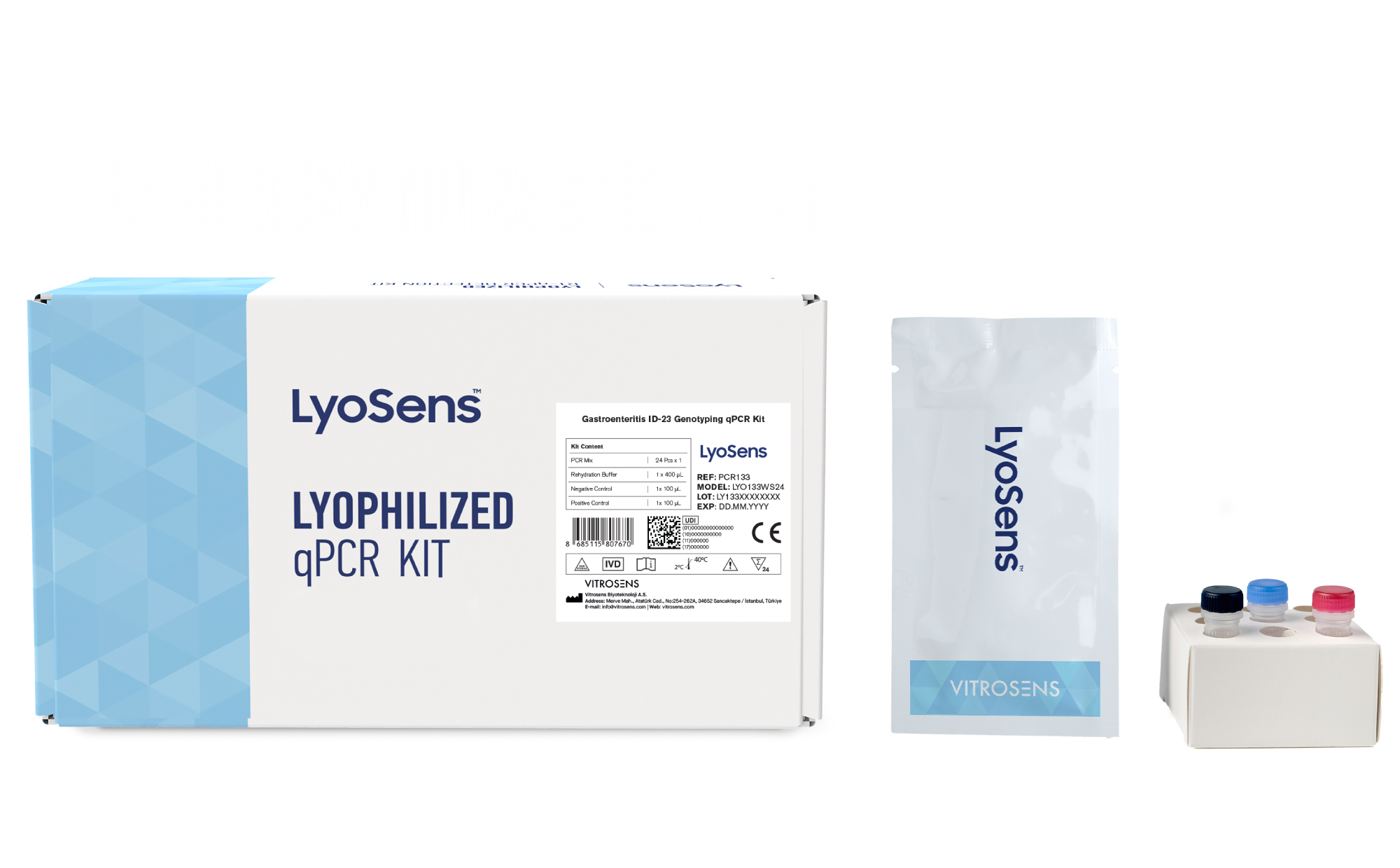
Vitrosens offers the Gastroenteritis ID-23 Genotyping qPCR Kit in both ChainFor™ and LyoSens™ formats to support different laboratory workflow requirements. While the ChainFor™ version is supplied using a conventional cold-chain format, the LyoSens™ version features lyophilized reagents that simplify storage and transportation while reducing reagent preparation steps before testing.
Compatible real-time PCR instruments:
- ChainPro™ NGX16-4F
- Thermo Scientific™ QuantStudio™ 5
- Bio-Rad™ CFX96
- QIAGEN Rotor-Gene™ Q
- Roche LightCycler™ 480
- Roche LightCycler™ 96
- Tianlong Gentier™ 96
The kit is compatible with multiple real-time PCR platforms. Depending on the instrument used, the recommended PCR consumables, including strip or tube type and color, may vary according to the instructions for use.
Conclusion
The 2026 Cyclospora outbreak serves as a reminder that foodborne parasitic infections remain an important cause of gastroenteritis worldwide. Because gastrointestinal symptoms are shared by numerous viral, bacterial and parasitic pathogens, laboratory evaluation supports healthcare professionals by complementing clinical assessment and epidemiological information.
Understanding the diversity of gastrointestinal pathogens and selecting laboratory approaches appropriate for the clinical setting remain important components of infectious disease management and public health surveillance.
Contact sales@vitrosens.com to learn more about Vitrosens’ molecular solutions for gastrointestinal pathogen detection.
References
- Centers for Disease Control and Prevention. Cyclospora Outbreak Linked to Iceberg Lettuce in 9 States. 2026.
- Centers for Disease Control and Prevention. Cyclospora Outbreak Linked to Iceberg Lettuce Expanded to Four New States. 2026.
- U.S. Food and Drug Administration. Investigation of Multistate Cyclospora Outbreak Linked to Iceberg Lettuce. 2026.


