

Inflammation is not always visible, but it can provide important clues about infection, tissue injury and long-term health risks. The hsCRP test helps measure low levels of C-reactive protein, supporting clinical evaluation when inflammation status or cardiovascular risk needs closer attention.
hsCRP and CRP: Two Ranges, Different Clinical Questions
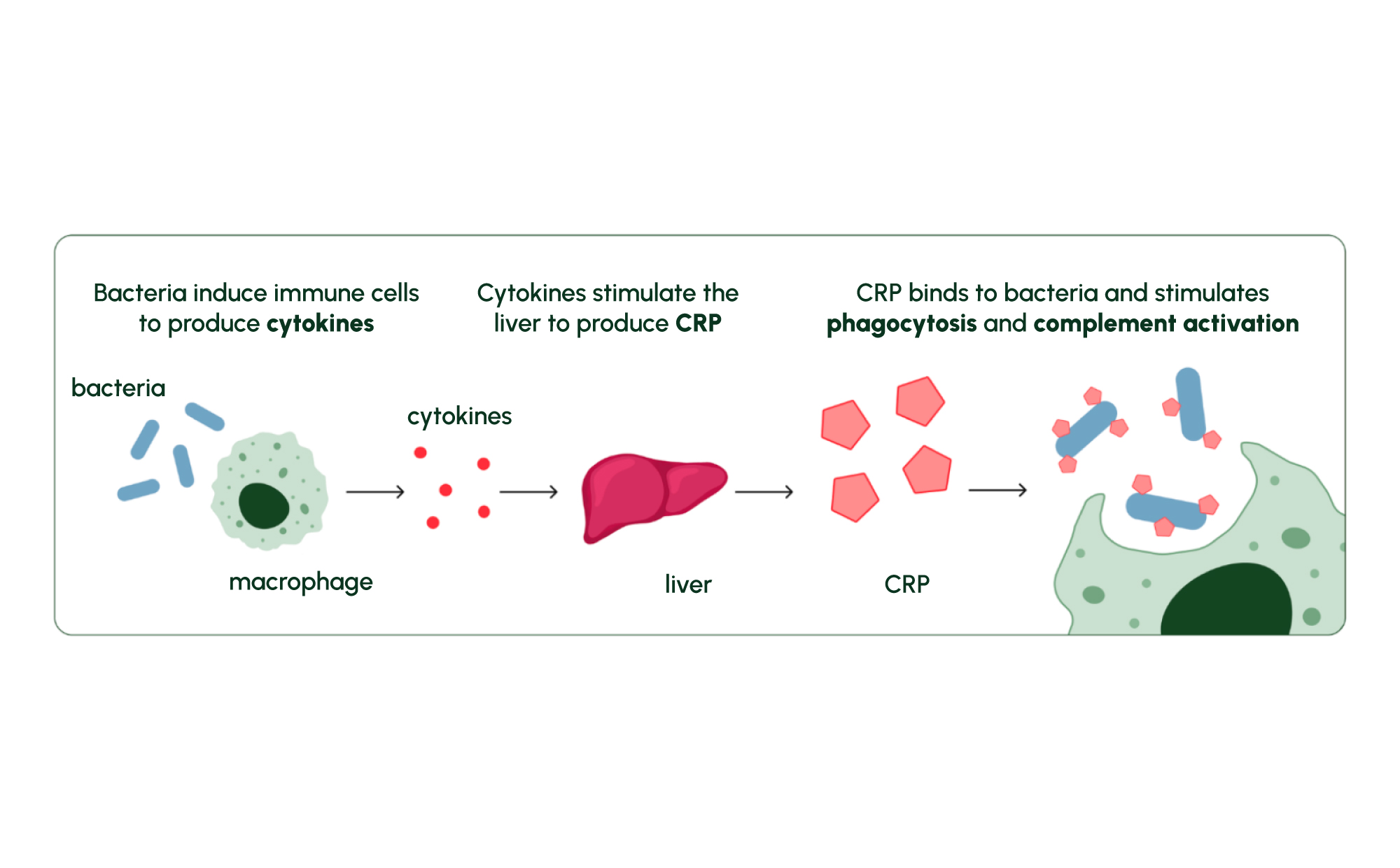
C-reactive protein, or CRP, is an acute-phase protein produced by the liver in response to inflammation. CRP levels may rise rapidly during infection, tissue damage or inflammatory conditions, making CRP testing useful in clinical assessment and follow-up.
High-sensitivity CRP, known as hsCRP, focuses on lower CRP concentrations. This makes the hsCRP test especially useful when healthcare professionals need to evaluate low-grade inflammation that may be associated with cardiovascular risk.
Clinical Value of hsCRP Testing
Inflammation plays an important role in many clinical conditions. While standard CRP testing is commonly used to support the evaluation of acute inflammation, hsCRP testing can provide additional insight into subtle inflammatory activity.
In cardiovascular health assessment, hsCRP may be used together with other clinical factors such as cholesterol levels, blood pressure, diabetes status, smoking history, age and family history. It should not be interpreted alone, but it can support a broader risk evaluation when used appropriately.
Diagnostic Support with RapidFor™ hsCRP / CRP (FIA)
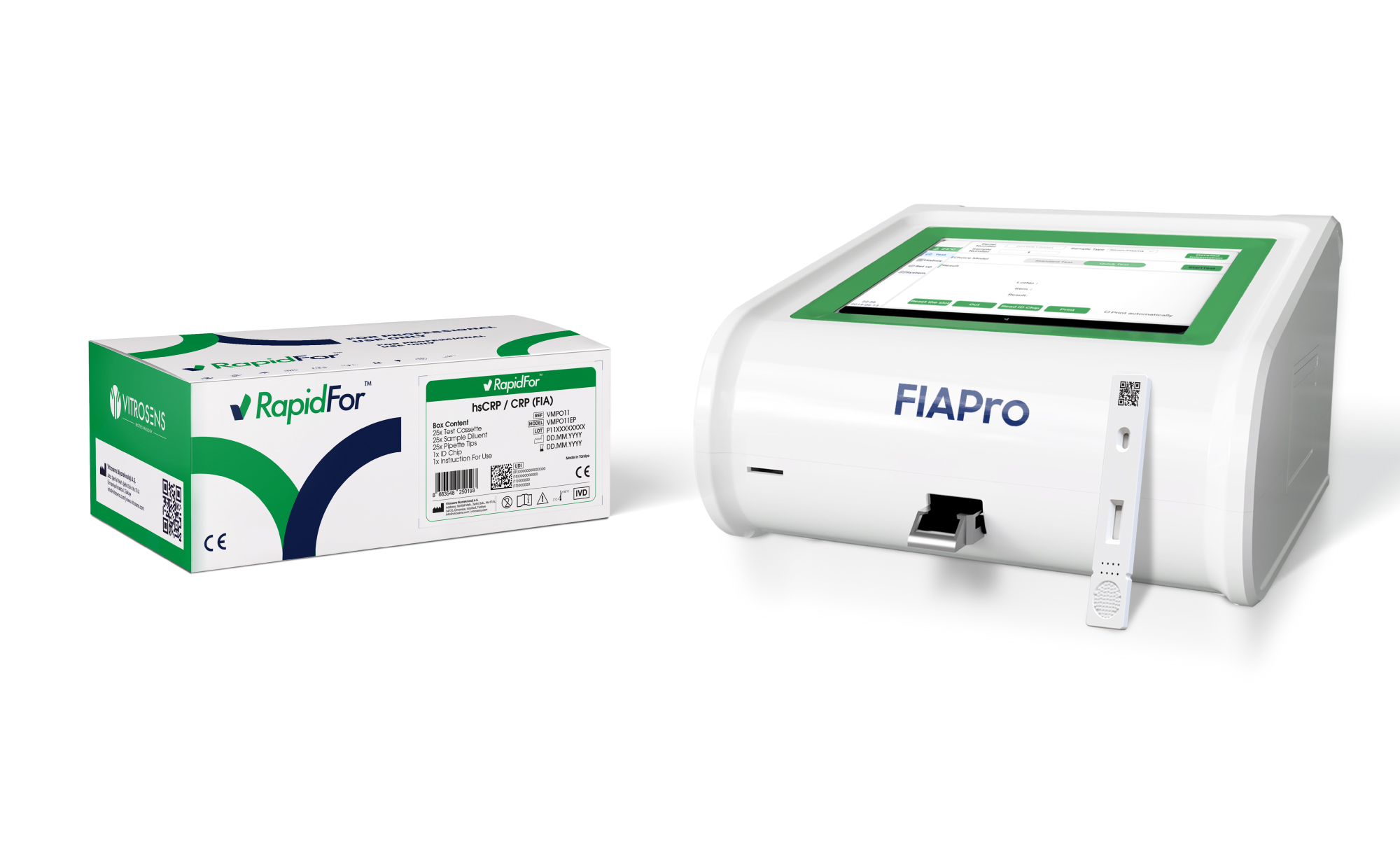
RapidFor™ hsCRP / CRP (FIA) is designed for the quantitative measurement of C-reactive protein in human serum, plasma and whole blood samples. By combining fluorescence immunochromatography with the Vitrosens VMFIA1001 Immunofluorescence Analyzer, the test supports objective analyzer-based result interpretation in professional workflows.
The test provides results after a 3-minute reaction time, helping laboratories and healthcare institutions support efficient inflammation assessment. Its dual hsCRP / CRP format allows users to evaluate both lower CRP levels related to cardiovascular risk assessment and higher CRP levels associated with inflammatory conditions.
- Quantitative CRP measurement in serum, plasma and whole blood
- Supports both hsCRP and CRP evaluation
- Analyzer-read results with Immunofluorescence Analyzer
- 3-minute reaction time for practical workflows
- Supports inflammation assessment and clinical follow-up
- May assist cardiovascular risk evaluation when interpreted with other clinical findings
- Suitable for professional in vitro diagnostic use
FIA Testing in Modern Diagnostic Workflows
Immunofluorescence analyzer systems can help standardize result reading by reducing dependence on visual interpretation. In time-sensitive workflows, FIA-based testing supports practical, rapid and quantitative assessment from patient samples.
For markers such as hsCRP and CRP, this approach can be valuable because clinicians often need measurable results that can be followed over time. Analyzer-based reporting can help support consistent interpretation within the clinical context.
Interpreting hsCRP Results Responsibly
An hsCRP test result should always be interpreted together with clinical symptoms, medical history and other laboratory findings. Temporary factors such as recent infection, injury, intense exercise or other inflammatory conditions may influence CRP levels.
Because hsCRP reflects inflammation rather than a single disease, healthcare professionals should use it as part of a broader assessment rather than as a standalone diagnostic result.
Conclusion
The hsCRP test provides clinically useful information about low-grade inflammation and may support cardiovascular risk assessment when combined with other patient data. With rapid FIA-based quantitative testing, RapidFor™ hsCRP / CRP (FIA) can help professional users integrate inflammation assessment into efficient diagnostic workflows.
Explore how RapidFor™ hsCRP / CRP (FIA) can support rapid quantitative inflammation assessment in professional diagnostic workflows. Contact sales@vitrosens.com to learn more.
References
- American Heart Association. “hsCRP Insights for Healthcare Professionals.”
- Kamath, D. Y.; Xavier, D.; Sigamani, A.; Pais, P. “High sensitivity C-reactive protein (hsCRP) & cardiovascular disease: An Indian perspective.” Indian Journal of Medical Research. 2015;142(3):261-268.
- Myers, G. L.; et al. “CDC/AHA Workshop on Markers of Inflammation and Cardiovascular Disease.” Circulation. 2004.


