

Antimicrobial resistance (AMR) continues to reshape how healthcare systems detect, monitor and respond to bacterial infections. Among the most concerning threats are carbapenem-resistant Enterobacterales (CRE), a group of Gram-negative bacteria that can cause difficult-to-treat infections and limit treatment options. On 13 May 2026, ECDC highlighted a landmark multi-country genomic surveillance study on carbapenem- and/or colistin-resistant Enterobacterales (CCRE) in Europe. The findings underline the growing need for strong AMR surveillance and targeted resistance gene detection.
Why Carbapenem-Resistant Enterobacterales Are a Public Health Concern
AMR poses a major threat to human health worldwide. AMR occurs when microorganisms, such as bacteria, adapt in a way that makes existing infection treatments less effective. Carbapenems are important antibiotics used for severe infections caused by multidrug-resistant Gram-negative bacteria. When bacteria such as Klebsiella pneumoniae and Escherichia coli become resistant to carbapenems, treatment options may become more limited.
This is why carbapenem-resistant Enterobacterales are a growing concern for hospitals and healthcare systems. These bacteria can spread in healthcare settings, affect vulnerable patients and make infection control more challenging.
What the ECDC CCRE Survey Shows
The ECDC CCRE survey provides an important overview of carbapenem- and/or colistin-resistant Enterobacterales in Europe.
According to the full ECDC report, the study analyzed 2,973 Klebsiella pneumoniae species complex isolates and 548 Escherichia coli isolates from 323 hospitals in 36 European countries. The analysis combined clinical data, epidemiological information and whole-genome sequencing results.

Global Perspective: AMR Beyond Europe
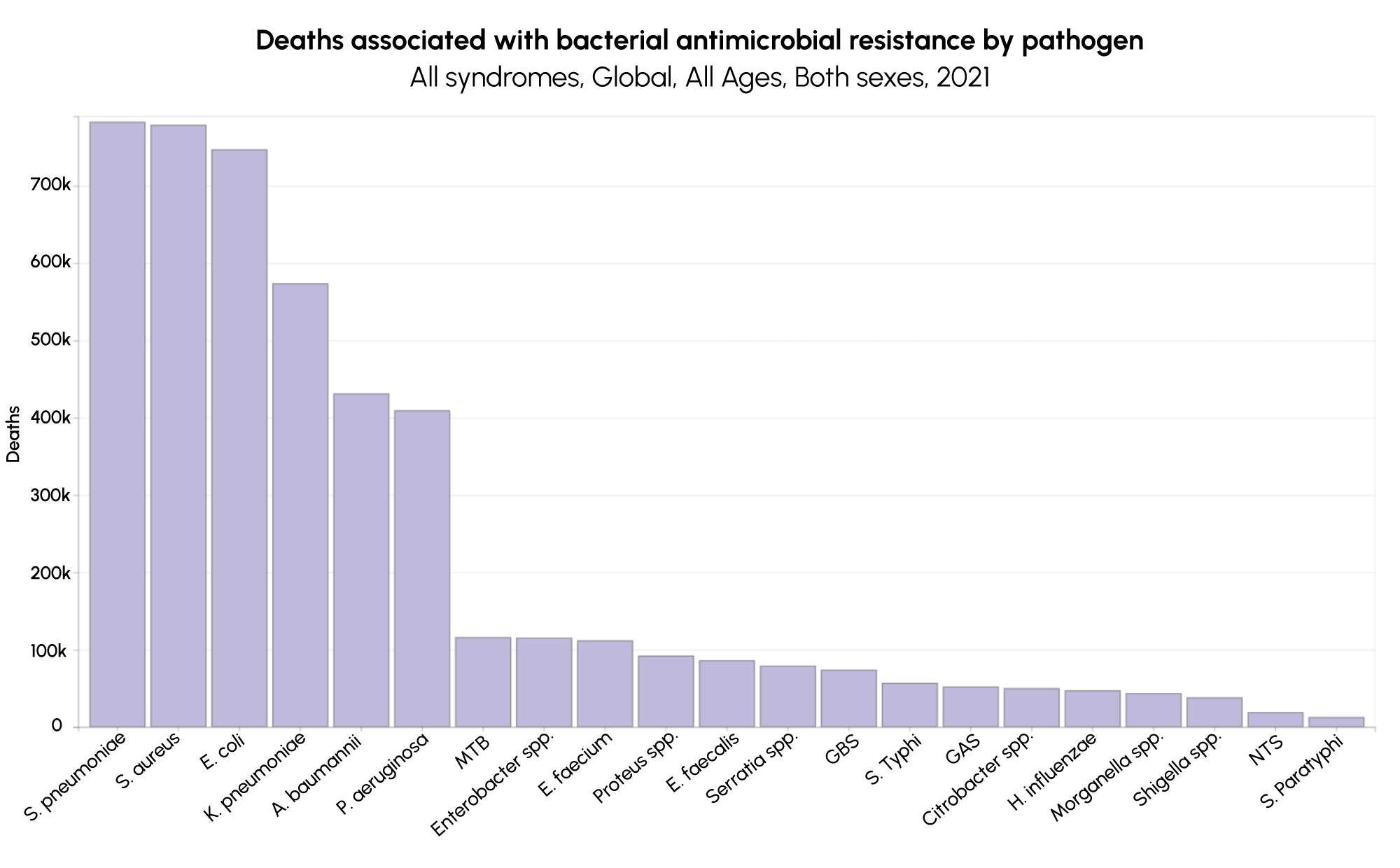
Antimicrobial resistance is not only a European public health concern. Globally, AMR continues to place a major burden on patients, healthcare systems and infection control strategies. According to IHME, 1.14 million deaths in 2021 were directly caused by AMR, while projections indicate that 39 million people may die from AMR between 2025 and 2050.
The Global Research on Antimicrobial Resistance (GRAM) study also estimated that 4.71 million deaths were associated with bacterial AMR in 2021, including 1.14 million deaths directly attributable to bacterial AMR. By 2050, annual deaths attributable to bacterial AMR are projected to reach 1.91 million, while deaths associated with AMR are projected to rise to 8.22 million. These estimates show why stronger surveillance, infection prevention, antimicrobial stewardship and laboratory-based resistance detection remain essential.
The Role of ABR ID-23 Genotyping qPCR Kit
In the context of increasing carbapenem resistance, targeted detection of AMR genes is becoming more relevant for laboratories working with multidrug-resistant bacterial pathogens. ABR ID-23 Genotyping qPCR Kit is designed for molecular detection of antimicrobial resistance genes and includes key carbapenem resistance targets such as KPC, NDM, OXA-48, IMP and VIM.
These targets are directly relevant to the carbapenemase-focused AMR landscape described in the ECDC CCRE survey. The panel also includes additional resistance-associated targets such as CTX, SHV, ampC, mecA/mecC, vanA, vanB, vanC1, qnrA, qnrB, qnrS, tetM, dfrA and sul1, supporting broader molecular evaluation of selected resistance determinants.
ABR ID-23 Genotyping qPCR Kit may provide practical support for AMR gene detection in professional laboratory settings. Results should be interpreted together with microbiological culture findings, antimicrobial susceptibility testing, clinical information and local epidemiological context.

Conclusion
The ECDC CCRE survey and global AMR data highlight a shared message: antimicrobial resistance is a growing challenge that requires stronger surveillance. In Europe, carbapenemase-producing K. pneumoniae and NDM-5-producing E. coli remain important concerns. Globally, AMR is already linked to millions of deaths, showing why infection control, antimicrobial stewardship and laboratory-based resistance detection are essential.
Whole-genome sequencing remains a powerful tool for public health surveillance, but targeted qPCR-based AMR genotyping can provide practical support for routine detection of clinically relevant resistance genes. In this context, ABR ID-23 Genotyping qPCR Kit offers a relevant molecular approach for detecting selected AMR determinants, including key carbapenem resistance genes, in professional laboratory workflows.
Contact sales@vitrosens.com or visit vitrosens.com to learn more about molecular diagnostic solutions for antimicrobial resistance gene detection.
References
- European Centre for Disease Prevention and Control. Europe advances genomic surveillance of CCRE with landmark multi-country study. 13 May 2026.
- European Centre for Disease Prevention and Control. Antimicrobial resistance in the EU/EEA (EARS-Net) – Annual Epidemiological Report for 2024. Stockholm: ECDC; 2025.
- World Health Organization. WHO bacterial priority pathogens list, 2024: bacterial pathogens of public health importance to guide research, development and strategies to prevent and control antimicrobial resistance.
- European Centre for Disease Prevention and Control. Analysis plan for the survey of carbapenem-resistant Enterobacterales 2025 (CRE25 survey). 21 January 2026.
- Institute for Health Metrics and Evaluation. Antimicrobial resistance (AMR). IHME.


