

As respiratory and gastrointestinal infections rise seasonally, clinicians often face the same critical question: is inflammation mild, moderate or severe?
Rapid C-reactive protein testing has become one of the most practical tools for evaluating inflammatory status at the point of care. With only a few microliters of whole blood and no instrumentation required, RapidFor CRP 10/40/80 rapid test provides immediate insight that can support clinical decision making in a variety of settings including community healthcare, pediatric evaluation, emergency triage and resource limited environments.
Introduction: Why CRP Measurement Matters Across Care Settings
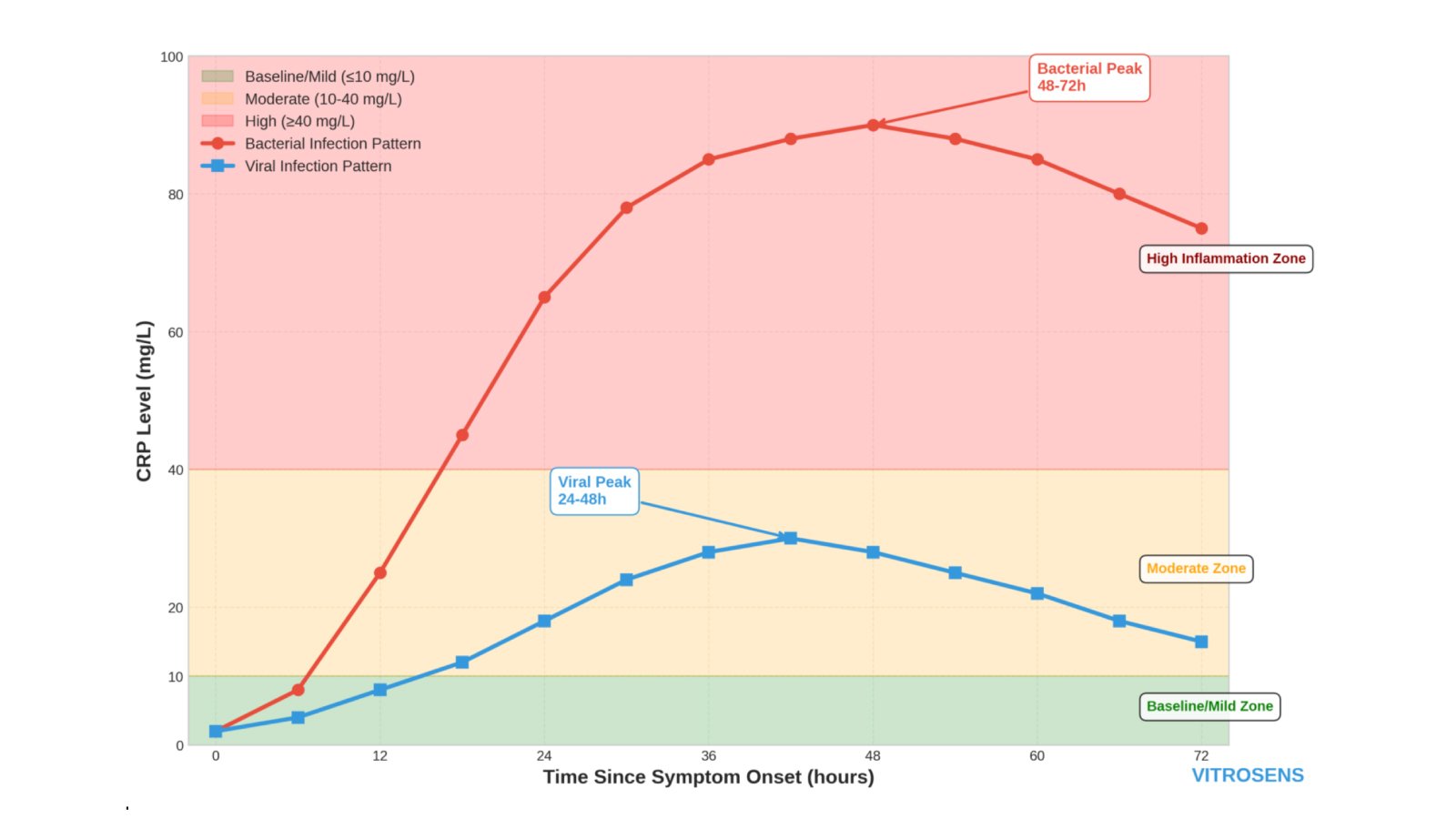
C-reactive protein is an acute phase reactant synthesized by the liver in response to inflammatory cytokines. CRP levels increase rapidly during bacterial infections, acute inflammation, and tissue injury. Because elevation patterns differ between viral and bacterial infections, CRP testing is commonly used as a supportive biomarker to help clinicians evaluate illness severity and guide next steps in patient management.
Rapid CRP assays with structured cut off levels allow healthcare workers to make faster assessments, especially when laboratory access is limited or when early treatment decisions are needed.
Understanding the Semi Quantitative RapidFor CRP 10/40/80 Rapid Test
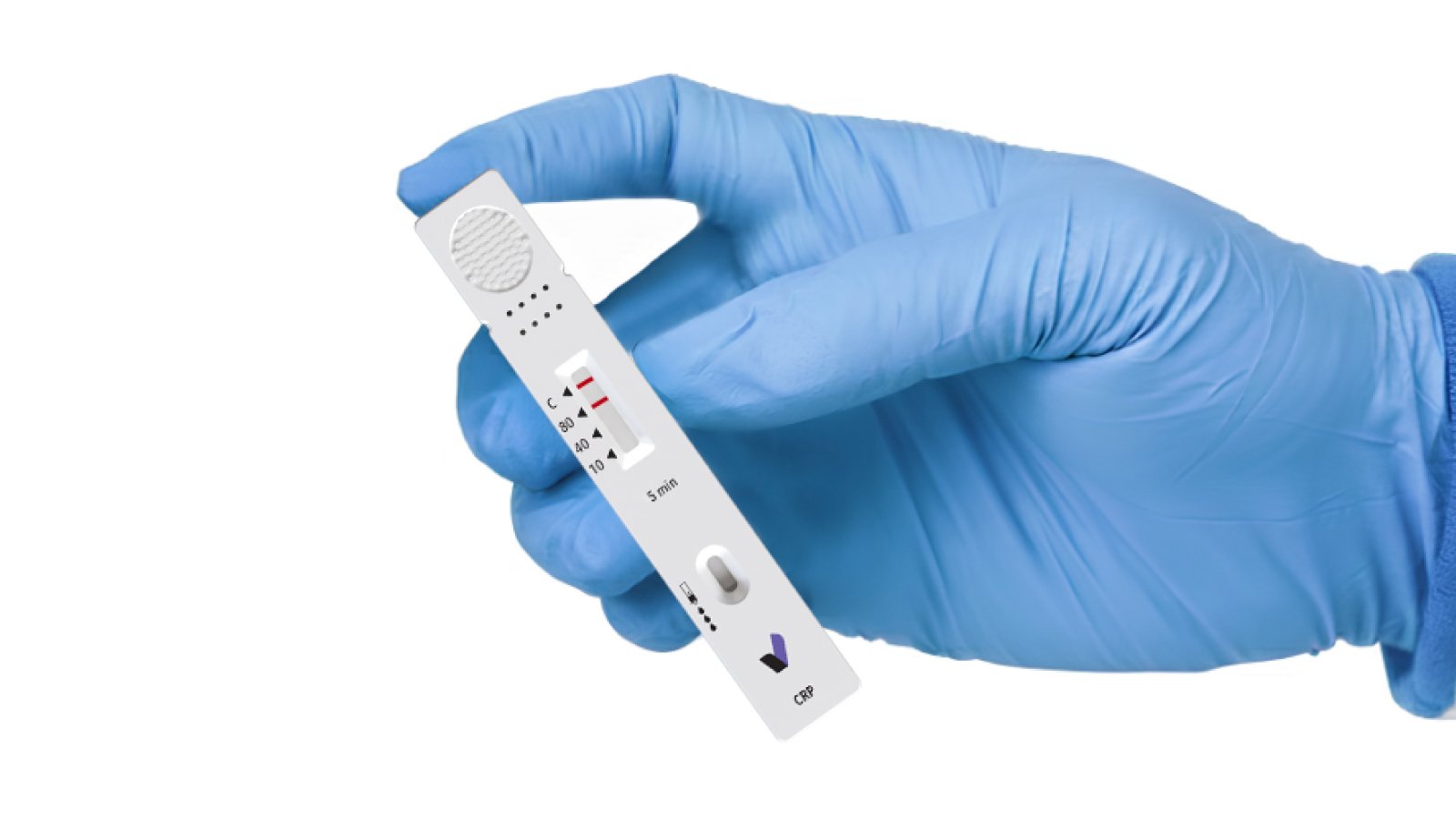
Vitrosens’ CRP rapid test is a lateral flow immunochromatographic assay designed to detect C-reactive protein from whole blood, serum or plasma. The test incorporates three clinically meaningful cut off zones:
• 10 mg/L range
Typical of mild inflammation. Common in many viral infections and low grade inflammatory processes.
• 40 mg/L range
Associated with moderate inflammation. May be seen in bacterial infections, complicated viral cases or localized inflammatory conditions.
• 80 mg/L range
Indicates high inflammation burden. More commonly seen in serious bacterial infections and advanced inflammatory states.
These thresholds reflect clinically utilized reference values and allow clinicians to quickly categorize inflammatory status without needing laboratory analyzers.
Who Benefits Most From Device Free CRP Testing?
Primary Care and Family Medicine
Many patients present with fever, cough or non specific symptoms where immediate inflammatory assessment guides whether further investigation, antibiotics or observation is appropriate.
Pediatrics
Children frequently present with acute infections. Semi quantitative CRP can support clinicians in identifying which cases may require closer monitoring or referral.
Emergency and Urgent Care
When patient volumes are high, rapid CRP results support triage decisions by revealing the degree of inflammation.
Mobile Clinics and Low Resource Settings
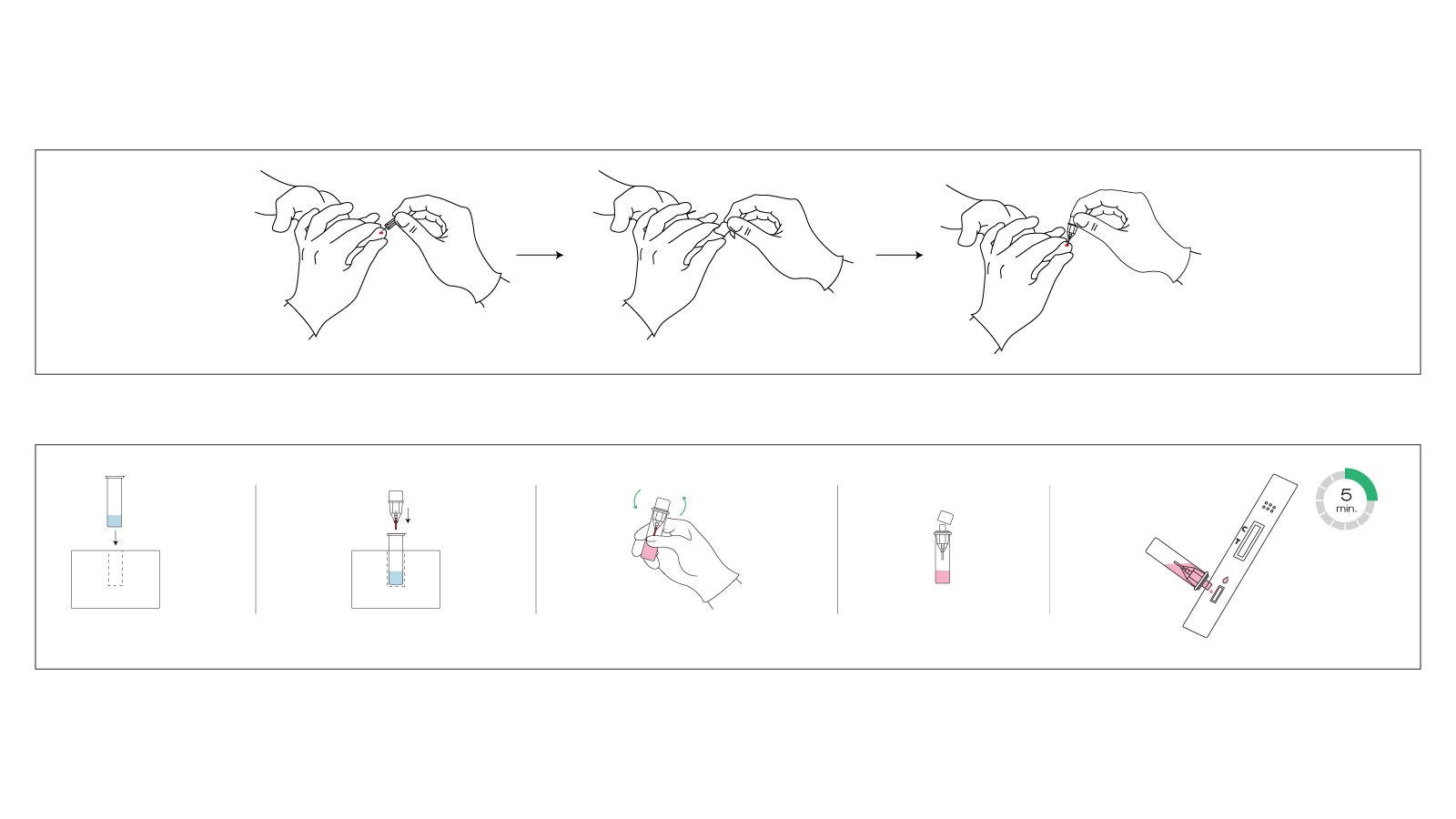
Because the test uses fingerstick whole blood and needs no instrumentation, it is ideal for rural clinics, home visits and humanitarian settings.
How the Rapid Test Works
RapidFor CRP 10/40/80 Test Kit uses an immunochromatographic method with anti CRP antibodies immobilized on the test strip. After adding a small blood sample, CRP binds to colloidal gold conjugates and travels through the membrane to form visible bands according to the CRP concentration.
Clinical Interpretation: What the Ranges Suggest
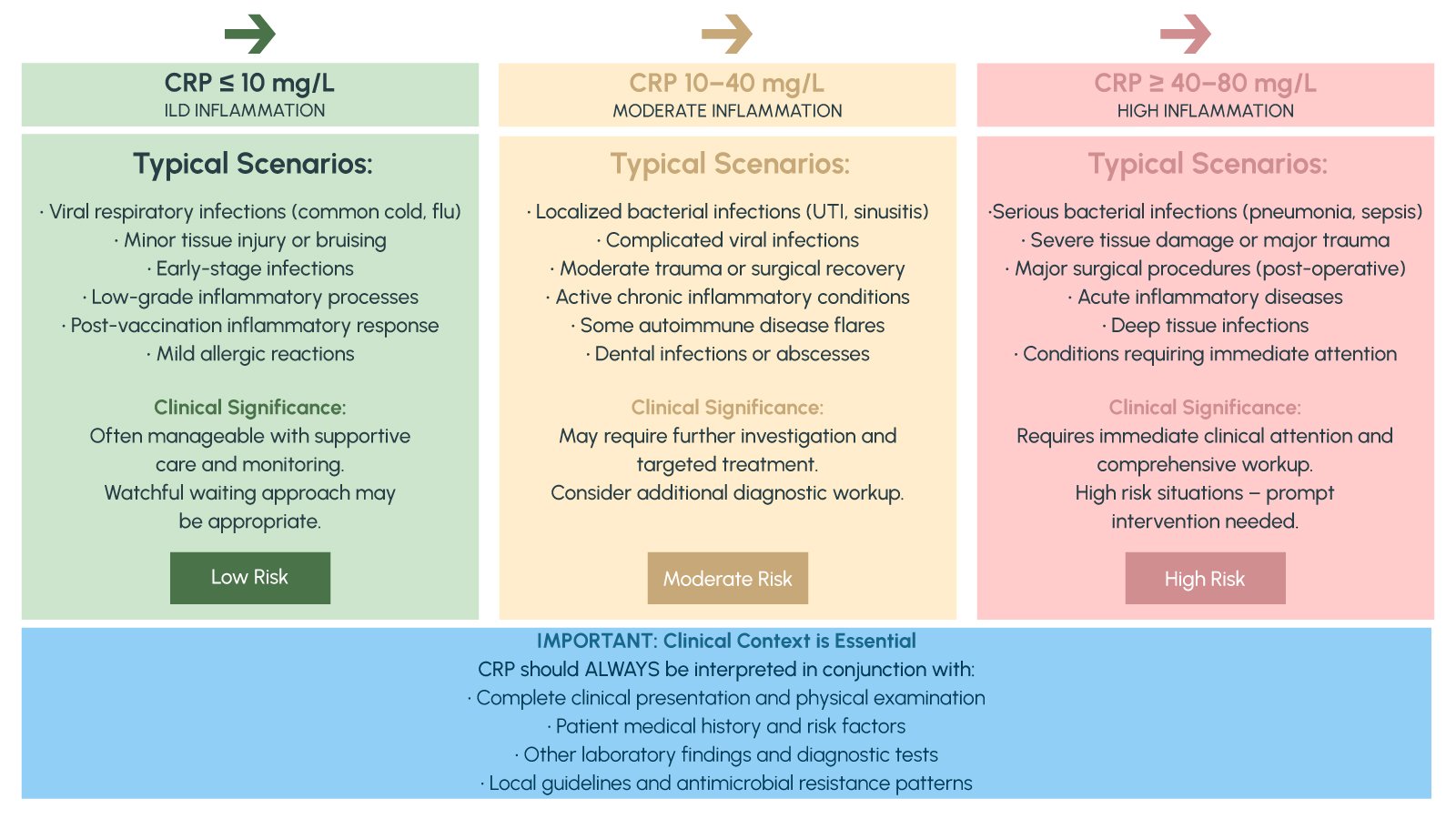
Although CRP should never be used as the only diagnostic parameter, the cut off bands provide useful supportive information.
CRP around 10 mg/L
Mild inflammation
Often consistent with viral infections
Suitable for watchful waiting in selected cases depending on symptoms and clinical judgement
CRP around 40 mg/L
Moderate inflammatory response
May indicate localized bacterial infection or significant viral illness
Encourages further assessment depending on the clinical picture
CRP around 80 mg/L or higher
Strong inflammatory response
Seen more frequently in serious bacterial infections
Helps clinicians prioritize further diagnostic workup and timely patient management
Why a Device Free CRP Test Adds Value
1. Faster decision making
Results in minutes allow earlier evaluation of illness severity.
2. Improved accessibility
Works anywhere without electricity, instruments or calibration.
3. Supports diagnostic stewardship
Can help reduce unnecessary use of antibiotics by contributing to overall clinical assessment.
4. Useful in outbreak periods
During respiratory and gastrointestinal infection peaks, CRP helps categorize patient severity quickly.
Vitrosens’ Perspective
At Vitrosens Biotechnology our focus is developing rapid, reliable and accessible diagnostic solutions that support real time decision making in clinical and community settings. RapidFor CRP 10/40/80 Rapid Test is designed for consistency, clarity and ease of use, ensuring that healthcare professionals can make informed decisions even in settings without laboratory infrastructure.
Conclusion
Rapid assessment of inflammation is an important component of modern clinical practice. With its defined cut off levels, fast workflow and instrument free format, the CRP 10/40/80 Rapid Test offers a practical tool to support clinicians across primary care, pediatrics, emergency medicine and low resource environments. Semi quantitative CRP testing helps guide evaluation of infection severity and contributes to more efficient patient management.
For Product Information or Demo Kits
If you would like more information about the CRP 10/40/80 Rapid Test or wish to explore integration into your testing workflows, you can reach our team directly at sales@vitrosens.com. Our specialists will provide support on product availability, clinical use cases and partnership opportunities.
References
- Vitrosens Biotechnology Inc. CRP Rapid Test Instructions for Use.
- Pepys MB et al. C reactive protein: a critical update. J Clin Invest.
- NICE Guidelines for Acute Infection Assessment.
- Global CRP utilization trends in primary care and emergency medicine.


