

The 2025 winter respiratory season is already underway, and early data suggest it may be more intense than the previous year. For diagnostics suppliers this means preparing for overlapping waves of influenza, COVID‑19, RSV and other respiratory viruses. This article summarises what has occurred so far in 2024–2025 and compares it with the previous season to draw lessons for planning the 2025/2026 diagnostic season.
2024 season at a glance
The 2024-2025 winter respiratory season in Europe has been characterised by an early and relatively strong influenza wave. By week 12 of 2025 the European Respiratory Virus Surveillance Summary (ERVISS) reported that influenza activity had already peaked around week 6 and was declining. Across the EU/EEA, influenza A and B viruses circulated together with an approximate 3:1 ratio and A(H1N1)pdm09 viruses outnumbered A(H3N2) by roughly 2:1. Sentinel sites reported pooled influenza test positivity around 21 % (median 26 %) at the peak, while severe acute respiratory infection (SARI) surveillance recorded pooled positivity of 14 % (median 17 %).

National patterns varied markedly. Denmark maintained 26 % positivity in week 11 2025, Italy recorded a 19.2 % positivity during the peak, while France, Spain and the United Kingdom remained below 10 % positivity. Germany experienced a high peak of 46.1 % positivity in week 10 before falling to 38.7 % in week 11. England’s UKHSA data corroborate this heterogeneity: laboratory surveillance showed influenza positivity increasing through October 2024 but still low at 2.5 % in week 42, rising to around 4.2 % during the seasonal peak in March 2025 before declining again. Hospital admission rates for influenza climbed from 0.55 per 100 000 in October 2024 to 1.29 per 100 000 by mid‑April 2025.
Across the Atlantic, the United States experienced its most severe influenza season since 2017–2018. CDC surveillance classified the 2024–25 season as “high severity”: influenza activity began increasing in mid‑November 2024, peaked in early February 2025 and remained above baseline through May. Population‑based FluSurv‑NET data recorded 39 319 laboratory‑confirmed hospitalisations between October 2024 and April 2025 and a peak weekly hospitalisation rate of 13.7 per 100 000 (week 6), the highest in more than a decade. By 30 April 2025 the cumulative hospitalisation rate stood at 128.3 per 100 000, while the National Healthcare Safety Network (NHSN) reported 545 026 influenza‑associated hospitalisations and a cumulative rate of 161.5 per 100 000 for the season. Influenza A viruses accounted for 95.9 % of hospitalisations, with A(H1N1)pdm09 and A(H3N2) making up about 59 % and 41 % of subtyped cases respectively.
Understanding the surveillance data
These figures derive from a mix of sentinel and non‑sentinel surveillance systems. Sentinel networks collect respiratory specimens from patients with acute respiratory or influenza‑like illness through selected general practices and clinics. In 2024–25 they enabled timely calculation of epidemic thresholds and showed when influenza positivity crossed the 10 % epidemic threshold (around week 47 2024 in most EU countries). Non‑sentinel surveillance, which includes hospital laboratories and national data marts, captured more severe disease and highlighted rising hospitalisation rates during the February peak.
Integrated reporting via ERVISS and national dashboards allowed public‑health agencies to track co‑circulation of influenza, SARS‑CoV‑2 and RSV. For example, in England the same October 2024 report showed COVID‑19 PCR positivity of 13.3 % in hospital settings and 6.8 % in general practice swabs, while RSV positivity rose to 3.4 %. By April 2025 these figures had fallen to 5.2 % SARS‑CoV‑2 positivity in hospitals and 0.7 % RSV positivity. Such integrated surveillance is crucial for forecasting test demand and informing vaccine strategies.
2023‑2024 season at a glance
European surveillance data show that influenza activity returned to pre‑COVID patterns, but peaks were lower and the season was shorter. During the 2023‑2024 EU/EEA flu season 89 343 sentinel specimens were tested; 17 % (15 028) were positive for influenza. The percentage of positive specimens crossed the epidemic 10 % positivity threshold in week 49 2023 (mid‑December), peaked at 39 % in week 52, dipped during the holidays and then fluctuated around 35 % between weeks 3–6 2024, before dropping below 10 % in week 12. Overall sentinel positivity stayed below the 40 % “high virus circulation” threshold.
In the United Kingdom, influenza positivity rose above 5 % from week 49 2023 and peaked at 17.5 % in week 4 2024, much lower than the 31 % peak in the previous season. Peaks varied by nation: Scotland’s non‑sentinel surveillance recorded a 14.9 % positivity peak between weeks 52 2023 and 4 2024; Northern Ireland saw a single peak around 22 % in week 3 2024; Wales reported bimodal peaks of 11.8 % (week 52 2023) and 17.0 % (week 5 2024). Across all of England’s sentinel laboratories, influenza A predominated, particularly A(H3N2), with influenza B positivity only reaching 1.6–1.7 %.
Outside Europe, the U.S. Centers for Disease Control and Prevention (CDC) classified the 2023‑2024 influenza season as moderate. CDC estimates that influenza caused about 40 million illnesses, 18 million medical visits, 470 000 hospitalisations and 28 000 deaths in the United States. Despite high burden, vaccination prevented 9.8 million illnesses, 120 000 hospitalisations and 7 900 deaths.
Understanding the surveillance data
The figures above come from a combination of sentinel and non‑sentinel surveillance systems. Sentinel surveillance, used by ECDC and many national agencies, relies on a network of general practitioners and laboratories that systematically collect specimens from patients with influenza‑like or acute respiratory illness. This provides a representative picture of community‑level virus circulation and allows calculation of positivity thresholds, such as the 10 % epidemic threshold. Non‑sentinel surveillance includes data from hospital laboratories, clinics and care homes, capturing more severe cases and offering a broader view of virus spread; in the EU/EEA 1 558 368 non‑sentinel specimens were tested in 2023‑2024 and 10 % were positive for influenza.
Since 2023–2024 the European Centre for Disease Prevention and Control (ECDC) has coordinated the European Respiratory Virus Surveillance Summary (ERVISS), which integrates influenza, SARS‑CoV‑2 and RSV surveillance across the EU/EEA and WHO European Region. Integrated surveillance helps public‑health officials understand co‑circulation patterns and supports decision‑making on testing and vaccination strategies.
Lesson 1: Flu came back but peaks were lower
The EU/EEA data show that although influenza A(H1N1)pdm09 viruses dominated (78 % of subtyped influenza A viruses) and 90 % of positives were influenza A, the overall intensity was modest. Sentinel positivity exceeded the 10 % epidemic threshold for only 15 weeks, compared with 25 weeks in 2022‑2023. At the peak, positivity reached 39 %, still below the 40 % high‑circulation threshold. The shorter season and lower peaks translated into fewer severe cases across Europe and lower hospitalisation rates.
The UK’s laboratory data reinforce this trend. Influenza positivity through the national DataMart remained above 5 % from week 49 2023 to week 11 2024 but peaked at only 17.5 %. Scotland, Northern Ireland and Wales saw peaks between 14 % and 22 %. These numbers confirm that the 2023‑2024 flu season was longer but lower than the season before, likely due to continuing population immunity and vaccination.
U.S. influenza activity perspective
While Europe experienced a modest influenza season, data from the United States paint a complementary picture. U.S. clinical laboratories tested 3.9 million respiratory specimens for influenza during the 2023‑2024 season and 9.0 % were positive. Weekly positivity ranged from 0.4 % to 18.3 % and peaked at the end of December (week 52). Peak activity varied by region: West Coast and Pacific Northwest peaked in mid‑December; the Mid‑Atlantic, Southeast and Mountain regions peaked late December; the South Central region peaked in late January; New England peaked in early February; and the Midwest and Central regions peaked late February. U.S. public health laboratories confirmed 39 885 positive specimens and found that 76.9 % were influenza A and 23.1 % influenza B. Subtyping showed that A(H1N1)pdm09 viruses dominated early in the season, while A(H3N2) and B/Victoria viruses increased later, extending the duration of elevated activity. These findings mirror Europe’s moderate intensity but highlight regional variation and the importance of tailoring inventory and forecasting to local epidemiology.
Take‑away for distributors: Even moderate flu seasons generate double‑digit positivity and drive testing demand for several weeks. Pharmacies should forecast demand starting in mid‑December and expect activity to persist into March. Stocking reliable flu antigen tests (such as RapidFor® Influenza A/B Antigen Test) ensures availability when customers begin searching for “flu test near me.”
Lesson 2: RSV remains unpredictable
RSV activity showed significant regional variation. In England’s DataMart system, all‑age RSV positivity peaked at 12.5 % in week 48 2023. Northern Ireland recorded 18.3 % positivity in week 46 2023, while Wales saw an even higher peak of 27 % in week 44 2023. Scotland reported that RSV accounted for 22.2 % of all positive samples among non‑influenza viruses. Age‑specific data show that children under five years experienced the highest RSV positivity, with some UK reports noting peaks of 50 % in this cohort. Outside the UK, week‑3 2024 Irish surveillance data provide another snapshot. Of 198 sentinel GP respiratory specimens tested, 38.4 % were positive for influenza, 4.5 % for RSV, 4.5 % for SARS‑CoV‑2 and 6.1 % for rhino/enterovirus. These data illustrate how RSV often peaks early in winter, then declines, while influenza and rhinovirus can remain elevated.
The 2024 season also marked the rollout of new prevention tools. Countries began introducing RSV vaccination programmes for older adults and pregnant women. In England, 58.9 % of eligible older adults had received an RSV vaccine by the end of May 2025 and 42.8 % of women giving birth between the start of the programme and February 2025 were vaccinated. Scotland achieved 70.6 % coverage among eligible older adults and 49.6 % uptake in pregnant women. Wales reported 44.9 % coverage among eligible older adults and 40.3 % among pregnant women. These programmes aim to reduce severe RSV infections and may influence future testing demand by lowering hospitalisations in high‑risk groups.
Vaccination remains the cornerstone of influenza control. High coverage among adults aged ≥65 years in Europe and the United States contributed to the moderate severity of the 2023‑2024 season. Updated COVID‑19 booster shots are also available. Co‑administration of separate influenza and COVID‑19 vaccines is recommended when patients are eligible and the timing is right. Combination vaccines that protect against both illnesses are not yet available; however, several products from Moderna, Pfizer and Novavax are in phase 3 trials. These candidates use mRNA (Moderna and Pfizer) or protein‑based (Novavax) platforms, and early results suggest comparable or better immune responses than separate shots. If regulatory approvals proceed smoothly, a combination shot could become available as soon as the 2025‑2026 respiratory season. Nevertheless, challenges remain: influenza vaccines must be reformulated each year, SARS‑CoV‑2 variants evolve rapidly, and scientists must ensure that combining vaccines does not reduce efficacy or increase side effects. Distributors should therefore continue to plan for separate flu and COVID‑19 vaccines while monitoring combination vaccine development and uptake trends.
Although COVID‑19 faded from headlines, surveillance shows persistent virus circulation. A January 2024 WHO influenza update reported that SARS‑CoV‑2 positivity from sentinel surveillance remained around 8 % worldwide. Positivity was highest in South‑East Asia (~11 %), lower in the Eastern Mediterranean and Americas (around 10–9 %), stable at 5 % in Africa and around 8 % in Europe. Non‑sentinel surveillance showed a higher 15 % positivity. The same report noted that RSV activity was stable or decreasing in most countries; however, it remained elevated in Israel and Egypt.
Other respiratory pathogens also contributed to diagnostic demand. England’s DataMart recorded that rhinovirus had the highest positivity among non‑influenza viruses, fluctuating between 6 % and 24 % across the season. Parainfluenza positivity rose slowly from week 47 2023, reaching 7.2 % by week 14 2024; human metapneumovirus (hMPV) peaked at 4.3 % in week 52 2023. Scotland’s surveillance found rhinovirus in 15.9 % of positive samples, followed by Mycoplasma pneumoniae (5.3 %), hMPV (4.8 %), adenovirus (4.4 %), parainfluenza (3.6 %) and seasonal coronavirus (3.5 %). In Wales, SARS‑CoV‑2 was the most common non‑influenza pathogen (7.8 %) and rhinovirus accounted for 13.1 % of positive samples.
Co‑infections were notable in 2023‑2024. Analysis of respiratory specimens from England showed that 4 216 people with influenza had a pre‑, co‑ or secondary infection with another respiratory virus; among these, SARS‑CoV‑2 accounted for 47 % of co‑infections, while RSV accounted for 13.6 %. This reinforces the value of multiplex assays that detect influenza, RSV and SARS‑CoV‑2 simultaneously.
Despite lower positivity than during the pandemic peaks, SARS‑CoV‑2 still causes significant morbidity and mortality. Sentinel positivity around 8 % means that roughly one in twelve respiratory specimens tests positive for COVID‑19. Non‑sentinel positivity of 15 % indicates even higher activity in healthcare settings. These numbers highlight that COVID‑19 has not disappeared and that new variants could increase transmission. Integrated surveillance initiatives like ERVISS allow health agencies to monitor co‑circulation of influenza, SARS‑CoV‑2 and RSV in real time. They also inform laboratories on when to prioritise multiplex testing.
Co‑infection data emphasise the complexity of respiratory seasons. Nearly half of all patients with confirmed influenza had another virus, mostly SARS‑CoV‑2 or RSV. Such overlapping infections can complicate clinical management and increase the demand for tests that can differentiate pathogens quickly. Public‑health recommendations now include updated COVID‑19 booster vaccines and RSV immunisations for high‑risk groups. These measures may reduce hospitalisations but will not eliminate the need for testing, especially when patients present with non‑specific respiratory symptoms.
Lesson 3: Prepare for overlapping waves and co‑infections
The following strategic take‑aways can help distributors prepare for winter 2025/2026:
- Expect multiple waves and overlapping peaks. Flu, RSV, COVID‑19 and other viruses often peak at different times. For example, RSV positivity peaked in October/November 2023, influenza peaked in January 2024 and parainfluenza rose later in March. Distributors should plan stock levels to cover this extended respiratory season.
- Regional variation matters. While Europe saw moderate influenza peaks (< 40 % positivity), Wales experienced RSV peaks as high as 27 % and Northern Ireland saw influenza positivity reach 22 %. Tailoring inventory to local epidemiology and monitoring weekly surveillance updates will help avoid shortages.
- Combination testing is the future. Co‑infection data show that nearly half of patients with influenza had another virus, predominantly SARS‑CoV‑2. Rapid multiplex antigen tests that detect influenza A/B, RSV and COVID‑19 reduce the number of swabs and allow clinicians to differentiate pathogens quickly.
Practical planning tips
- Data‑driven forecasting: Monitor weekly surveillance updates from ECDC, WHO and national agencies. Use local positivity trends to adjust orders dynamically. For instance, if RSV activity begins to rise in October, allocate more RSV or combo tests early in the season.
- Collaborate with healthcare providers: Pharmacists, general practitioners and testing centres can offer insights into upcoming demand surges. Align inventory with scheduled vaccination campaigns and public‑health initiatives to ensure products are available when interest spikes.
- Invest in training and consumer education: As at‑home diagnostics grow, educate staff and customers about the benefits of multi‑pathogen tests and proper sample collection. Clear instructions reduce invalid tests and improve customer satisfaction.
- Strengthen supply chains: Holiday periods and winter weather can disrupt logistics. Build buffer stock and work with multiple suppliers or distributors to avoid bottlenecks. Consider drop‑shipping directly to clinics or pharmacies for urgent replenishment.
RapidFor solutions
Vitrosens’s RapidFor® product line is designed for modern respiratory diagnostics:
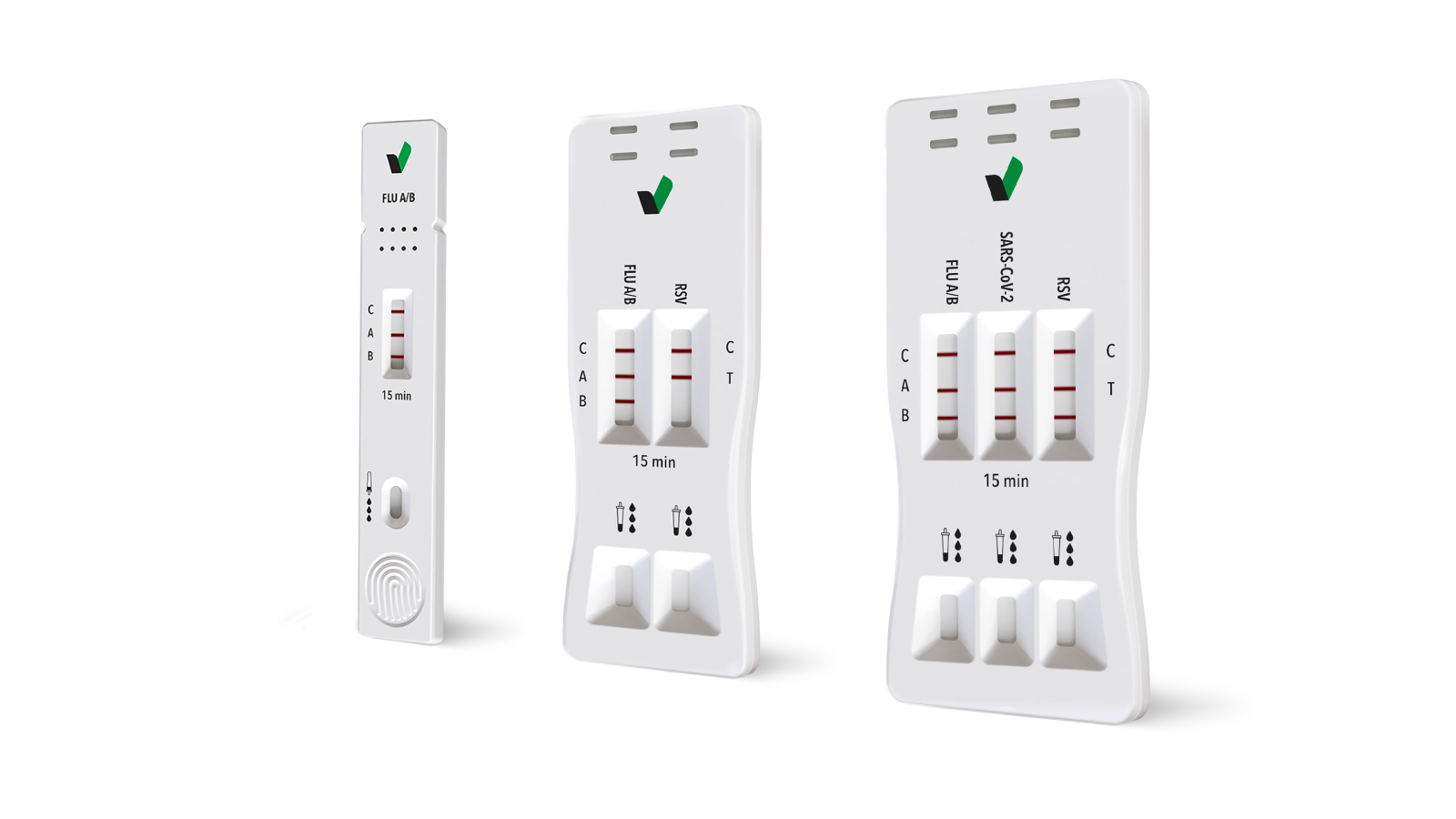
- RapidFor® Influenza A/B Antigen Test – a nasal swab test that detects influenza A and B within 15 minutes, with sensitivity and specificity comparable to laboratory methods.
- RapidFor® RSV & Flu A/B Combo Test – an integrated assay detecting RSV and influenza types A/B from a single swab, ideal for paediatric and geriatric populations. The high RSV positivity in Wales (27 %) and Northern Ireland (18 %) underscores the importance of this combo test.
- RapidFor® 3‑in‑1 Combo (SARS‑CoV‑2 & Influenza A/B & RSV) – a multiplex antigen test that differentiates COVID‑19, flu and RSV in one cartridge. Given that SARS‑CoV‑2 accounted for nearly half of respiratory co‑infections with influenza and sentinel SARS‑CoV‑2 positivity remained around 8 % globally, this test helps clinicians make isolation and treatment decisions quickly.
- Fluorescence immunoassay (FIA) and PCR solutions – for settings requiring higher sensitivity, our RapidFor® FIA analyser and Respiratory Pathogen PCR kits provide quantitative results for influenza A/B, RSV, SARS‑CoV‑2 and other targets.
Conclusion
The 2024‑2025 respiratory season has demonstrated that demand for diagnostics can surge even when virus circulation varies by region. This year’s influenza wave peaked earlier and reached higher positivity levels (pooled ~21 % across Europe) than the previous season, and the United States recorded the highest cumulative hospitalisation rate in more than a decade. Although RSV and SARS‑CoV‑2 activity decreased later in the season, the overlapping peaks underscore the need for robust supply chains, multiplex testing and real‑time surveillance. Comparing 2024‑25 with the moderate 2023‑24 season emphasises how rapidly respiratory epidemiology can change and why distributors must remain vigilant. By monitoring surveillance updates and stocking versatile rapid tests, pharmacies and distributors can meet demand during overlapping viral waves and ensure patients receive timely, accurate diagnoses.
For more information about RapidFor products or to plan your inventory for the upcoming season, contact our sales team at sales@vitrosens.com.
Together, we can help healthcare providers navigate the uncertainties of winter 2025/2026 with confidence.
References
- Seasonal influenza, 2023‑2024 – Annual epidemiological report. European Centre for Disease Prevention and Control (ECDC), 2024. Provides EU/EEA sentinel and non‑sentinel data, including positivity thresholds and the introduction of the ERVISS surveillance system europa.eu.
- Surveillance of influenza and other seasonal respiratory viruses in the UK, winter 2023 to 2024. UK Health Security Agency, 2025. Reports influenza and RSV positivity, non‑influenza pathogen activity, and co‑infection data across England, Scotland, Wales and Northern Ireland uk【857698938567306†L1458-L1497】.
- Surveillance of respiratory syncytial virus: winter 2024 to 2025. UK Health Security Agency, July 2025. Describes RSV disease patterns and vaccine uptake among older adults and pregnant women. Reports that RSV activity began around week 42 2024, peaked around weeks 47–49 2024 and returned to baseline by February 2025 uk; also provides vaccine uptake estimates for older adults and pregnant women gov.uk
- 2023‑2024 Influenza Season Summary: Influenza Severity Assessment, Burden and Burden Prevented. U.S. Centers for Disease Control and Prevention, Nov 2024. Summarises the U.S. influenza season severity and vaccination impact cdc.gov
- Influenza Update N° 463 (22 January 2024). World Health Organization. Provides global influenza, SARS‑CoV‑2 and RSV sentinel surveillance data, including regional positivity rates cdn.who.int.
- Influenza, RSV and Other Respiratory Viruses Surveillance Report – Week 3 2024. Health Protection Surveillance Centre (HPSC), Ireland, Jan 2024. Offers sentinel and non‑sentinel positivity data for influenza, RSV, SARS‑CoV‑2 and rhinovirus ie.
- Influenza Activity in the United States during the 2023–2024 Season and Composition of the 2024–2025 Influenza Vaccine. U.S. Centers for Disease Control and Prevention, Sept 2024. Provides data on the number of specimens tested, proportion positive, weekly peak positivity, regional variation and virus subtype distribution cdc.gov
- Is There a Combination COVID‑19 and Flu Vaccine? Not Yet, But There Could Be Soon. GoodRx Health, Oct 2024. Summarises the absence of an approved combination vaccine, describes ongoing clinical trials by Moderna, Pfizer and Novavax and their use of mRNA or protein‑based platforms, notes potential availability for the 2025‑2026 respiratory season and discusses challenges such as annual influenza reformulation and variant drift goodrx.com
- Influenza Activity in the United States during the 2024–25 Season and Composition of the 2025–26 Influenza Vaccine. U.S. Centers for Disease Control and Prevention, Sept 2025. Describes the high‑severity 2024‑25 influenza season, noting that activity increased in mid‑November 2024, peaked in early February 2025 and remained elevated through May gov. The report documents 39 319 laboratory‑confirmed hospitalisations with a peak weekly rate of 13.7 per 100 000 and a cumulative FluSurv‑NET rate of 128.3 per 100 000 cdc.gov . It also notes that influenza A viruses accounted for 95.9 % of hospitalisations and that A(H1N1)pdm09 viruses were slightly more common than A(H3N2) viruses cdc.gov.
- Nivel FluCov Influenza‑COVID‑19 Activity Report #3. Nivel, 1 April 2025. Provides an international overview of the 2024‑25 season. Reports that influenza activity declined after peaking in week 6 across the EU, with pooled positivity around 21 % (median 26 %) and SARI positivity around 14 % nl. Highlights that Denmark maintained 26 % positivity, Italy 19.2 %, the UK, France and Spain <10 %, and Germany’s positivity fell from 46.1 % to 38.7 % nivel.nl. Notes that influenza A and B circulated at a 3:1 ratio and that A(H1N1)pdm09 predominated over A(H3N2) at roughly 2:1 nivel.nl. Also summarises regional indicators such as England’s 8.3 % positivity and a weekly hospitalisation rate of 2.88 per 100 000 nivel.nl, and U.S. positivity of 10.7 % with a hospitalisation rate of 2.0 per 100 000 nivel.nl.
- National flu and COVID-19 surveillance report: 24 October 2024 (week 43). UK Health Security Agency, Oct 2024. Early‑season report summarising respiratory virus activity in England. Notes that influenza positivity increased slightly but remained low, with a mean positivity rate of 5 % in week 42, GP swab positivity at 1.4 %, and hospital admission rates for influenza at 0.55 per 100 000 gov.uk. Reports COVID‑19 PCR positivity of 13.3 % in hospital settings and 6.8 % in GP swabs gov.uk. RSV positivity increased to 3.4 % gov.uk and non‑influenza viruses such as adenovirus and rhinovirus remained at low to moderate levels gov.uk.
- National flu and COVID-19 surveillance report: 24 April 2025 (week 17). UK Health Security Agency, April 2025. End‑of‑season summary for England. Indicates that influenza activity decreased to baseline levels, with a weekly mean positivity rate of 2 % (down from 5.3 % the previous week), GP swab positivity 6.2 %, and hospital admission rates 1.29 per 100 000 gov.uk. Notes that RSV activity decreased with laboratory positivity 0.7 % and GP swab positivity 0.4 % gov.uk. Reports COVID‑19 PCR positivity 5.2 % in hospital settings and 2.7 % in GP swabs gov.uk and that A(H1N1)pdm09 remained the predominant influenza subtype gov.uk.


