

Rhinovirus is the most frequently detected respiratory virus worldwide and the leading cause of the common cold. Despite this, its clinical relevance is often underestimated, particularly in primary care and outpatient settings where respiratory symptoms are among the most common reasons for consultation.
During respiratory season, rhinovirus infections overlap extensively with influenza, RSV, parainfluenza, adenovirus, and SARS-CoV-2, creating diagnostic uncertainty that directly impacts treatment decisions, antibiotic use, and patient flow.
Understanding Rhinovirus and Its Epidemiological Importance
Rhinoviruses are non-enveloped, positive-sense RNA viruses belonging to the Enterovirus genus. More than 160 genetically distinct rhinovirus types have been identified, which explains why reinfections are common and long-term immunity is not achieved.
Unlike influenza or RSV, rhinovirus circulates throughout the year, with pronounced peaks in autumn, winter, and early spring. This continuous circulation makes rhinovirus a persistent challenge for primary care clinicians, especially when respiratory symptoms persist or recur.
Clinical Impact Beyond Mild Upper Respiratory Infection
Although commonly perceived as a mild illness, rhinovirus plays a critical role in more severe clinical scenarios, including:
- Acute asthma exacerbations in both children and adults
- COPD exacerbations leading to hospital admissions
- Lower respiratory tract infections in infants and elderly patients
- Prolonged cough syndromes and post-viral complications
Studies consistently show that rhinovirus is one of the most common viral triggers for asthma attacks and wheezing illnesses, particularly in pediatric populations.
Why Symptom-Based Diagnosis Is Not Sufficient
Rhinovirus symptoms such as sore throat, nasal congestion, cough, fever, and malaise are clinically indistinguishable from other respiratory viral infections. In real-world primary care practice, relying solely on symptoms often leads to:
- Empirical antibiotic prescribing
- Delayed or inappropriate antiviral decisions
- Repeat visits due to persistent symptoms
- Increased patient anxiety and dissatisfaction
Laboratory confirmation is therefore essential to accurately identify rhinovirus and rule out other clinically significant respiratory pathogens.
When Should Rhinovirus Testing Be Considered?
Rhinovirus testing is particularly valuable in the following scenarios:
Primary Care Settings
- Acute upper respiratory symptoms during respiratory season
- Persistent or recurrent cold symptoms
- Differentiation from bacterial infections when antibiotics are being considered
Pediatric Care
- Infants with bronchiolitis-like presentations
- Children with recurrent wheezing or asthma exacerbations
- Daycare or school-associated respiratory outbreaks
High-Risk Populations
- Elderly patients
- Patients with chronic lung disease
- Immunocompromised individuals
Product Focus: RapidFor™ Rhinovirus Test Kit
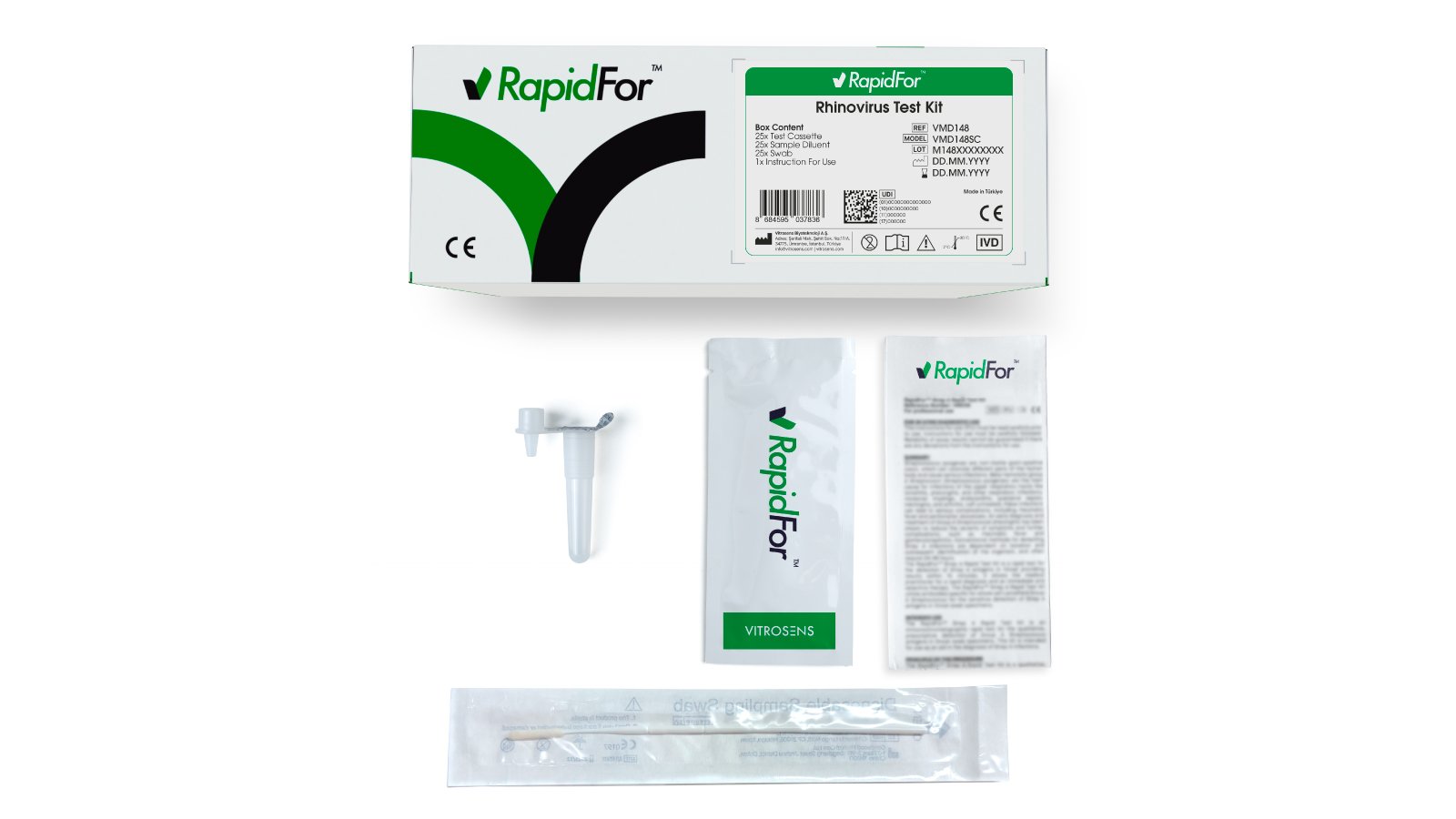
The RapidFor™ Rhinovirus Test Kit is optimized for use in primary care, outpatient clinics, and emergency departments. It enables fast identification of rhinovirus infections without the need for complex laboratory infrastructure.
Simple Workflow for Busy Clinical Environments

The streamlined workflow minimizes hands-on time and supports rapid clinical decisions in high-volume care settings.
The Role of Rhinovirus Testing in Primary Care Efficiency
Primary care systems face increasing pressure during respiratory season. Rapid rhinovirus testing contributes to efficiency by:
- Supporting immediate clinical decision-making
- Reducing unnecessary referrals and follow-up visits
- Improving patient reassurance through confirmed diagnosis
- Enabling appropriate symptomatic management
When viral etiology is confirmed, clinicians can confidently avoid antibiotics and focus on supportive care.
Rhinovirus Testing and Antibiotic Stewardship
Rhinovirus infections do not respond to antibiotics. Confirming rhinovirus as the causative agent plays a direct role in antimicrobial stewardship by preventing unnecessary antibiotic use and reducing the risk of antimicrobial resistance.
Rapid diagnostic confirmation empowers clinicians to align treatment decisions with evidence-based guidelines, particularly in primary care and pediatric settings.
Integration with Broader Respiratory Testing Strategies
Rhinovirus testing can be implemented as a standalone diagnostic tool or as part of broader respiratory testing algorithms. In settings where multiple respiratory viruses circulate simultaneously, rapid antigen testing supports early differentiation and optimized patient management pathways.
Conclusion
Rhinovirus is far more than a benign cause of the common cold. It represents a significant driver of primary care visits, pediatric respiratory illness, and chronic disease exacerbations. Accurate and rapid detection is essential for effective respiratory management, antibiotic stewardship, and healthcare efficiency.
RapidFor™ Rhinovirus Test Kit provides a reliable, easy-to-use solution for frontline healthcare settings seeking to strengthen their respiratory diagnostics capabilities.
To request technical information, evaluation kits, or distribution opportunities for RapidFor™ respiratory diagnostics, contact sales@vitrosens.com and enhance your respiratory testing portfolio.
Key References
- Centers for Disease Control and Prevention (CDC). Common Cold and Rhinoviruses
- World Health Organization (WHO). Respiratory Virus Surveillance Guidance
- Jacobs SE et al. Human rhinoviruses. Clinical Microbiology Reviews
- Johnston SL et al. Role of rhinovirus in asthma exacerbations. Journal of Allergy and Clinical Immunology


