

Helicobacter pylori (H. pylori) remains one of the most consequential bacterial infections in global health. Despite declining prevalence in some regions, it continues to affect billions worldwide and stands at the center of chronic gastritis, peptic ulcer disease, and gastric cancer. Because the infection can remain silent for years while progressively damaging the stomach lining, fast, reliable, and accessible diagnostics have become essential across clinical settings.
The need for both antigen and antibody rapid tests is growing, as each provides complementary information: antigen tests detect active infection, while antibody tests reflect immunologic exposure over time. Together, they offer a more complete diagnostic picture for clinicians, hospitals, and laboratories.
What Makes H. pylori a Unique Pathogen?
H. pylori is the only known bacterium capable of long-term colonization of the human stomach. It survives extreme acidity through urease production and deep mucosal embedding, enabling decades-long persistence.
Its clinical relevance stems from the following characteristics:
- It causes chronic gastritis, often asymptomatic.
- It is a major factor in peptic ulcer disease, historically present in 60-90% of ulcer cases in high-prevalence regions (WHO, NIH).
- It is classified as a Group I carcinogen by WHO due to its role in the development of gastric adenocarcinoma.
- Eradication significantly reduces long-term malignancy risk, especially before precancerous changes occur.
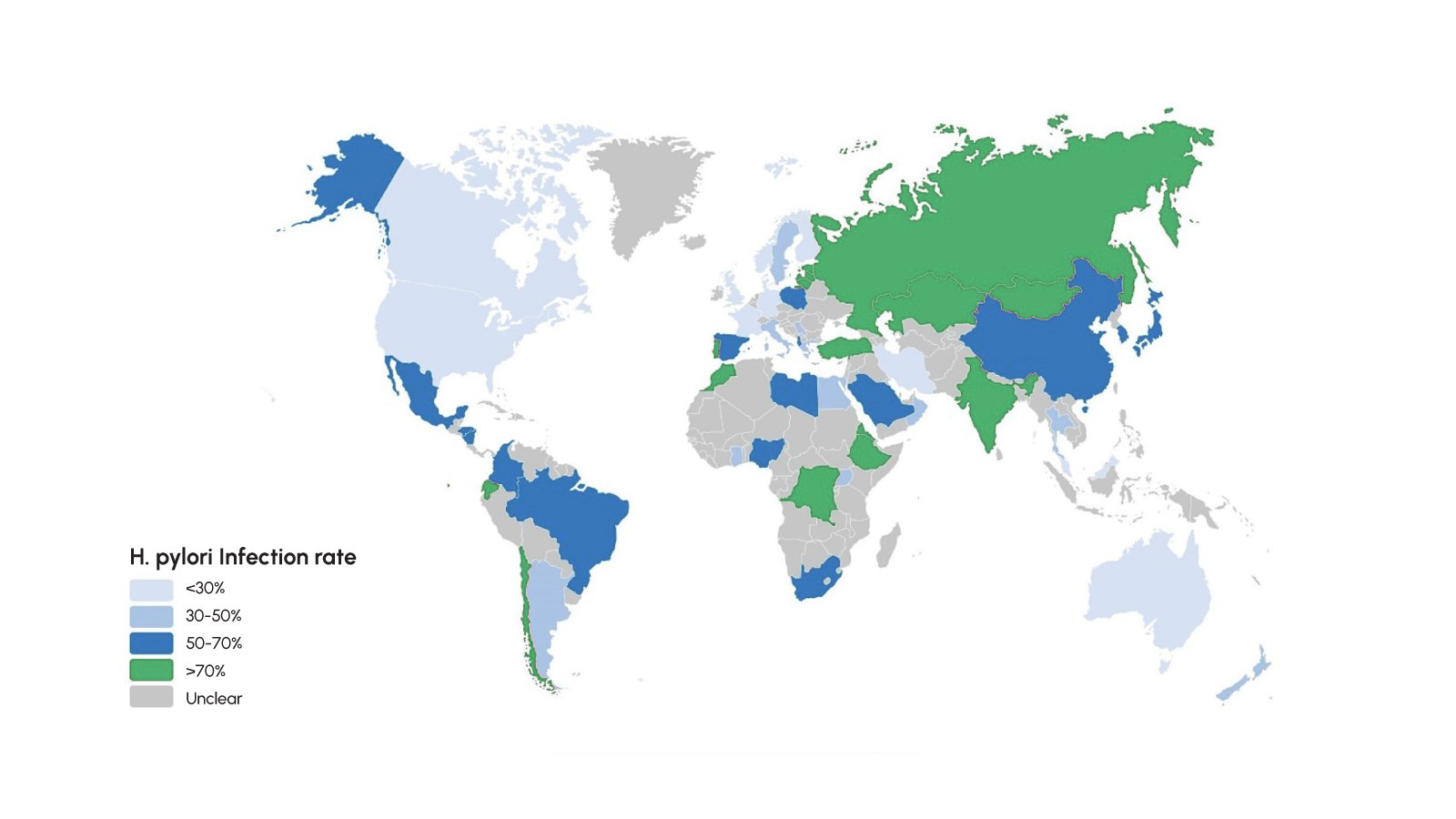
Key Scientific Insights About H. pylori
These non-speculative, well-documented findings enhance understanding of why accurate diagnostics matter:
- pylori has co-existed with humans for at least 50,000 years, based on genomic evidence.
- It is responsible for the majority of chronic bacterial infections
- Only a small fraction of infected individuals develop severe outcomes, but those outcomes carry significant morbidity.
- Eradication therapy reduces the incidence of gastric cancer in high-risk populations, as shown in long-term cohort studies (NEJM, Lancet).
- Prevalence remains above 70% in many parts of Africa, Asia, and Latin America, making rapid tests crucial for accessible diagnostics.
Antigen vs. Antibody Testing: Complementary Tools for Accurate Diagnosis
H. pylori Antigen Test (Stool Antigen) – Detects Active Infection
The stool antigen test identifies current, ongoing infection by detecting bacterial antigens. It is recommended for:
- Symptomatic patients
- First-line diagnosis in primary care and gastroenterology
- Test-of-cure following treatment (after ≥4 weeks)
- Settings without urea breath test or laboratory PCR
Vitrosens’ RapidFor H. pylori Antigen Test is validated to detect clinically significant strains, including CagA-associated virulent variants.
H. pylori Antibody Test (IgG/IgM Serology) – Detects Immune Exposure
The antibody test reflects past or possible present exposure. It is valuable when:
- Rapid screening is needed
- Stool testing is impractical
- Epidemiologic mapping is required
- The patient’s symptoms are nonspecific
Antibody testing is not used for test-of-cure but provides important background information in clinical decision-making.

Clinical Importance: Why Rapid Testing Matters Now
H.pylori continues to drive significant gastric morbidity:
Peptic Ulcer Disease
Though prevalence changes across regions, H. pylori remains a major contributor to both gastric and duodenal ulcers globally.
Chronic Gastritis and Dyspepsia
Long-standing inflammation leads to impaired gastric function and reduced quality of life.
Gastric Cancer
H. pylori infection precedes gastric adenocarcinoma through a well-established progression:
infection → chronic gastritis → atrophic gastritis → metaplasia → cancer
(WHO, IARC, NIH).
Resource-Limited Settings
Rapid antigen and antibody tests enable practical diagnosis where endoscopy, breath testing, or molecular workflows are inaccessible.
Why Vitrosens RapidFor H. pylori Tests Are Valuable
Vitrosens provides two complementary rapid tests enabling diagnostic flexibility across clinical workflows:
RapidFor H. pylori Antigen Test Kit
- Detects active infection
- Point-of-care compatible
- Validated for virulent strain coverage
- Results in 15 minutes
RapidFor H. pylori Antibody Test Kit
- Useful for rapid screening
- Requires only a small blood sample
- Stable at room temperature
- Suitable for population-level mapping and clinical triage
Together, these tools support integrated diagnostic strategies that balance speed, accuracy, and accessibility.
Who Should Use Rapid Testing?
Rapid H. pylori tests are beneficial in:
- Primary care
- Gastroenterology clinics
- Pediatric care (in high-prevalence regions)
- Hospital laboratories
- Mobile healthcare units
- Community screening programs
They reduce reliance on invasive procedures and accelerate clinical decision-making.
How This Connects to Broader Diagnostic Pathways
Rapid antigen and antibody testing can serve as:
- First-line triage
- Follow-up after non-invasive screening
- Part of targeted gastric cancer prevention efforts
- Tools for optimizing endoscopy referral pathways
This integrated approach aligns with modern guidelines promoting early detection and efficient resource use.
Conclusion
H. pylori remains a major global driver of gastric disease, from chronic inflammation to ulcer formation and cancer development. Because the infection may persist silently for years, fast and accurate diagnostics are essential. Antigen testing identifies active infection, while antibody testing helps clinicians understand exposure history – and together, they form a complete diagnostic strategy.
Vitrosens’ RapidFor H. pylori antigen and antibody rapid tests offer a practical, reliable, and accessible solution for clinicians and healthcare systems aiming to improve diagnostic accuracy and patient outcomes.
If you would like to evaluate our H. pylori rapid tests or integrate them into your diagnostic workflow, you can reach our team at sales@vitrosens.com for detailed technical information and product support.
References
- World Health Organization (WHO). Helicobacter pylori and gastric cancer.
- International Agency for Research on Cancer (IARC). H. pylori carcinogenic classification.
- National Institutes of Health (NIH). H. pylori pathophysiology and clinical outcomes.
- New England Journal of Medicine (NEJM). Long-term studies on H. pylori eradication and cancer reduction.
- Lancet Gastroenterology & Hepatology. Global prevalence trends and diagnostic strategies.


